


 English
 中文简体
中文简体1. Material Selection and Weather Resistance in Outdoor Furniture Choosing the right material is the...
READ MOREBattery Energy Management System: Functions, Integration, and Enclosure Design
Author: Admin
Date: Sep 21,2026
Ask any operations manager who runs a battery energy storage system why one installation keeps delivering steady round-trip efficiency while a seemingly identical one degrades within two years, and the answer usually comes back to one thing: how well the management architecture handles heat, imbalance, and abnormal conditions. A battery energy management system does not replace the battery cells themselves, but it determines how much usable capacity you get, how safely the system operates, and how long the asset lasts. If you are evaluating storage hardware, the management system and the metal enclosure that houses it deserve as much attention as the cell chemistry.
Content
What a battery energy management system actually does
A battery energy management system, often abbreviated as BEMS, sits between the battery pack and the wider power infrastructure. Its job is to keep every cell inside a safe operating window while extracting the maximum available energy from the pack. In practice, that breaks down into five core functions:
- Continuous monitoring of voltage, current, and temperature at cell, module, and pack level.
- State estimation, including state of charge, state of health, and state of power, so that the system knows how much energy remains and how much power can be safely delivered.
- Cell balancing, which evens out voltage differences between series-connected cells so that weaker cells do not limit the whole pack.
- Thermal management coordination, which controls cooling fans, pumps, or liquid cooling loops based on temperature feedback.
- Protection and fault response, which isolates the pack quickly in the event of overcurrent, overvoltage, overtemperature, short circuit, or insulation failure.
The first and last functions are especially relevant to the physical design of the system. The BEMS can only protect cells if its sensors are reading accurate data, and it can only act on that data if the protection hardware, contactors, and cooling equipment respond reliably. That chain of sensing, decision, and actuation is where many storage systems fail, and usually the root cause is not the algorithm but the hardware environment around it.
Why the enclosure determines whether the management system can do its job
A BEMS is only as good as the conditions in which it operates. Battery cabinets are not just boxes; they are the interface between the management electronics and the physical stresses of the installation site. Several enclosure characteristics have a direct impact on management system performance.
Thermal control and airflow
Battery cells generate heat during charge and discharge, and the rate of heat generation rises with current. If the enclosure does not provide adequate airflow, sealing, or liquid cooling paths, the temperature sensors will report rising temperatures and the management system will be forced to derate the system. Continuous derating reduces throughput and accelerates the perception of underperformance. Conversely, a well-designed cabinet with guided airflow and low thermal resistance keeps the cells within the optimal window and gives the BEMS the headroom to run at full rated power. This is where liquid-cooled cabinets have a measurable advantage over air-cooled designs in high-power applications. A 125 kW liquid-cooled storage cabinet, for example, relies on consistent coolant flow and a tightly sealed enclosure to keep the temperature spread across modules within a narrow band under sustained load.
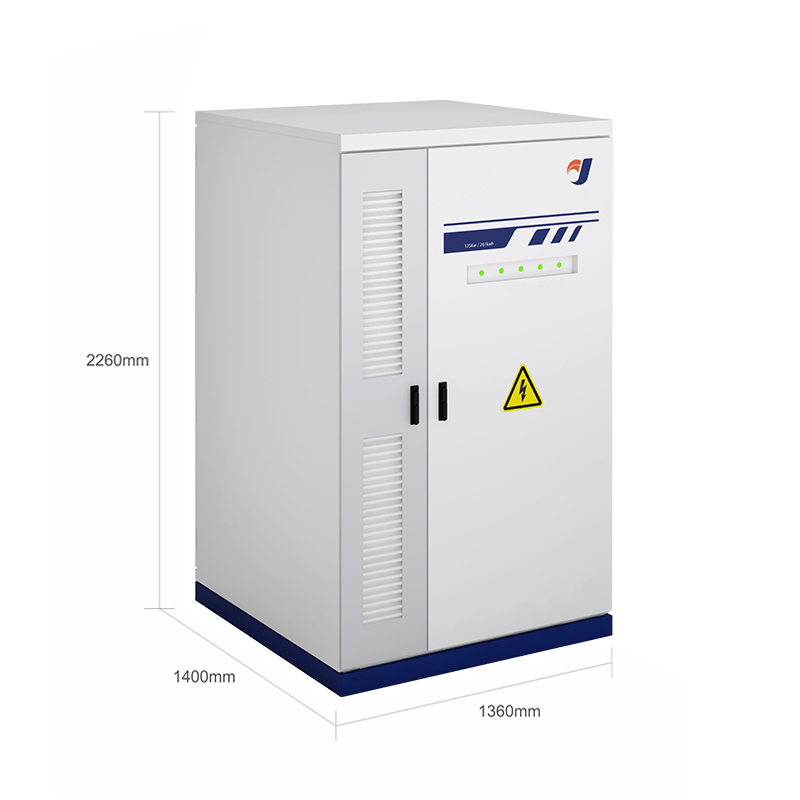 125 kW Liquid-Cooled Energy Storage CabinetThis liquid-cooled cabinet maintains tight temperature uniformity under sustained high-power loads, giving the battery management system the thermal headroom needed to avoid derating and keep sensor readings reliable.View Product →
Electromagnetic compatibility
Voltage and current measurements in a battery management system rely on low-level analog signals. Inverter switching, high-current busbars, and external power equipment all generate electromagnetic noise. A steel enclosure provides a degree of shielding that plastic or composite housings cannot match, helping to keep signal integrity intact. Without proper grounding and shielding, the BEMS can read false values and trigger nuisance faults or, worse, miss a genuine fault.
Mechanical integrity and ingress protection
Storage cabinets are transported, lifted, racked, and sometimes subjected to seismic or vibration loads. Welded seams, stiffened panels, and corrosion-resistant coatings keep the structure from flexing and fatiguing over time. The ingress protection rating, commonly expressed as IP54 or higher, determines whether dust and moisture can reach the management electronics and battery terminals. A small compromise in sealing can lead to insulation resistance degradation that the BEMS must then compensate for, reducing safety margins.
What to check when you evaluate a battery storage system
Because system failures are rarely caused by a single component, it is useful to evaluate the whole chain from management electronics to enclosure. The table below summarizes the most practical checkpoints for procurement engineers and project managers.
| Evaluation point | Why it matters | Typical acceptance criteria |
|---|---|---|
| Temperature sensor accuracy | Determines when derating or protection is triggered | ±1°C or better at cell/module level |
| Cell voltage measurement range | Must cover the full operating window of the chosen cell chemistry | ±5 mV per cell for most LFP and NMC chemistries |
| Balancing strategy | Affects capacity retention over the life of the pack | Active or passive balancing with a voltage spread target below 5% |
| Protection response time | Defines how quickly the system isolates a fault condition | Millisecond-level trip for short circuit and overcurrent events |
| Ingress protection | Keeps dust, humidity, and condensation away from electronics | IP54 or higher for outdoor and most industrial installations |
| Cooling architecture | Limits temperature spread between cells and supports rated power | Temperature differential below 5°C across the pack under steady load |
| Enclosure construction | Ensures long-term structural, sealing, and corrosion performance | Welded steel frame with powder coating and verified gasket sealing |
These are not marketing parameters. They are the tolerance points where management system decisions are made. A procurement team that reviews only cell capacity and cycle life, while ignoring these details, is likely to face avoidable capacity loss and service visits.
At a smaller power scale, such as a 49 kW liquid-cooled unit for a commercial rooftop or a small factory, the same principles apply: the management system needs clean sensor data, a stable thermal environment, and a cabinet that protects the electronics from dust and moisture.
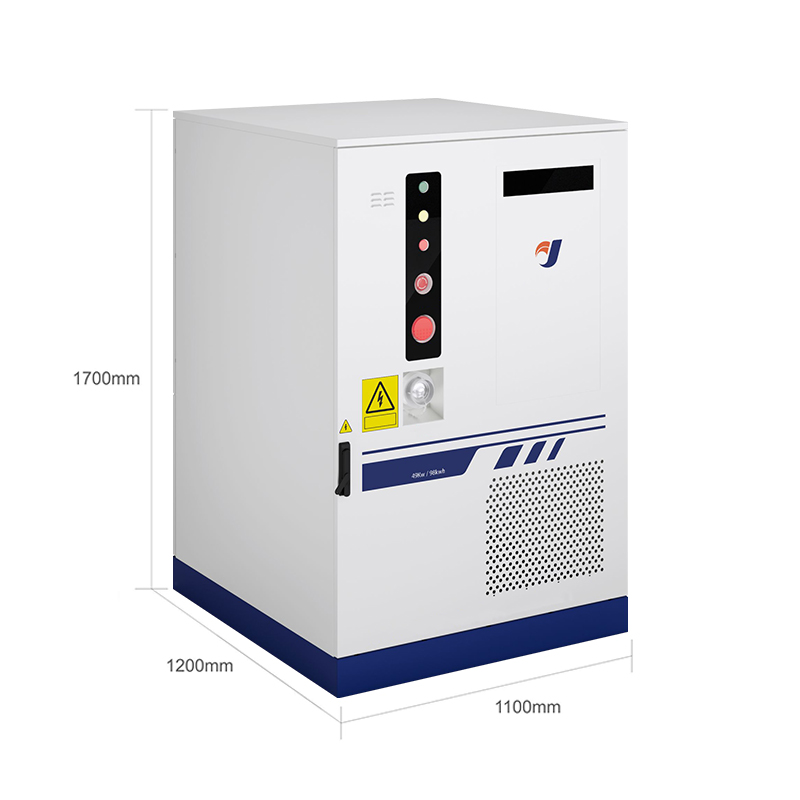 49 kW Liquid-Cooled Energy Storage CabinetA compact liquid-cooled unit suited for commercial rooftops and small factories, its integrated thermal management protects electronics from dust and moisture while preserving stable operation under varying loads.View Product →
How a metal fabrication background changes the quality of storage hardware
Battery management systems and enclosure manufacturing sit on two different sides of the storage value chain, but they converge in the final product. The electronics define the logic, while the enclosure defines the physical environment in which that logic either succeeds or fails. This is why an original equipment manufacturer with deep metalworking experience can deliver noticeably better storage results than one that simply matches cells and modules into a generic box.
Zhejiang Jiangnan Outdoor Products has spent more than four decades refining sheet metal manufacturing, originally for archive and office equipment and more recently for energy storage cabinet solutions. Its production facility uses robotic welding, laser cutting, and automated spraying lines, which translates directly into consistent weld quality, accurate panel geometry, and durable coatings on storage enclosures. The company has also obtained triple ISO certifications covering quality, environmental, and occupational health and safety management, which gives buyers a documented basis for supplier qualification.
For energy storage applications, the company produces liquid-cooled and wind-specific storage systems. These cabinets are engineered around the thermal and electrical layout of the system rather than being generic boxes. The 100 kW wind energy storage system, for instance, is designed around the variable charging and discharging profiles of renewable generation, which places heavier demands on both the management algorithm and the structural strength of the cabinet.
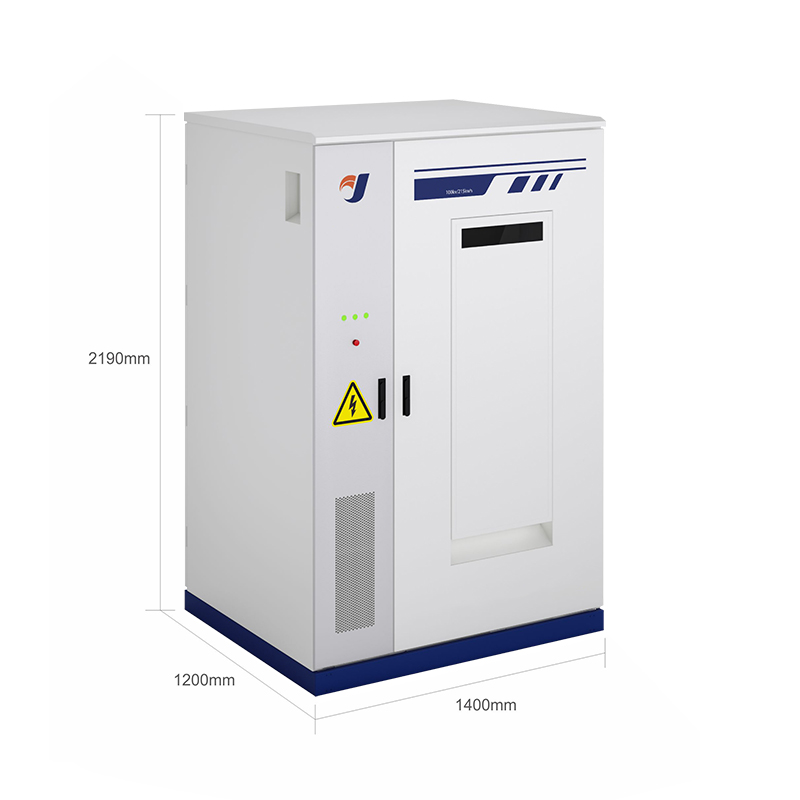 100 kW Air-Cooled Wind Energy Storage CabinetDesigned for variable wind-generation profiles, this air-cooled cabinet smooths renewable output fluctuations and supports off-grid and hybrid operation, while robust manufacturing and certifications ease grid-connection approvals.View Product →
Certifications and manufacturing capability matter in another way as well. Storage projects often involve grid connection, insurance requirements, and safety audits. A manufacturer that documents its quality processes and environmental controls makes the approval cycle shorter and less risky. That is why independent verification matters; the company's triple ISO certifications provide documented evidence that its quality management system is audited rather than merely claimed.
The practical takeaway for anyone specifying a battery energy management system is straightforward: evaluate the management logic and the enclosure as one integrated product. Confirm the sensor accuracy, the thermal strategy, and the protection response. Then verify that the cabinet can deliver the airflow, shielding, sealing, and structural stability that those functions depend on. When those two halves are engineered together, the system delivers predictable performance, a longer service life, and far fewer service events over the project horizon.

Contact Us Now
News
LET’S BUILD YOUR CUSTOMIZED PRODUCT

Copyright ©Zhejiang Jiangnan Outdoor Products Co., Ltd.All rights reserved.
