


 English
 中文简体
中文简体1. Material Selection and Weather Resistance in Outdoor Furniture Choosing the right material is the...
READ MOREStandalone Energy Storage as a Practical Alternative to Tesla Powerwall
Author: Admin
Date: Sep 14,2026
The most useful alternative to Tesla Powerwall is not necessarily another wall-mounted battery. It is a system that fits the actual load pattern: solar self-consumption, outage backup, or a partial off-grid design. That system can be built around a separate inverter, a battery management unit, and a floor-standing energy-storage cabinet. A cabinet-based alternative gives you more room for expansion, easier service access, and a steel enclosure that can be adapted to the exact dimensions and environmental conditions of the installation site.
Content
What an Alternative Needs to Deliver
The Tesla Powerwall is a convenient benchmark because it is an integrated unit that combines battery cells, an inverter, and monitoring in one wall-mounted box. When you look for an alternative, you are actually looking for three functions: store surplus electricity, release it when solar generation is low, and keep critical loads running during a utility outage. The form factor of those functions matters less than their real-world performance.
Before comparing products, define the minimum set of characteristics that an alternative must match:
- Usable capacity, not just maximum cell capacity
- Continuous discharge power and surge power
- Round-trip efficiency under normal operating temperatures
- Depth of discharge allowed by the battery management system
- Operating temperature range for the enclosure and electronics
- Communication protocol compatibility with your existing solar inverter
These six parameters matter more than the brand name. A wall-mounted unit with roughly 13.5 kWh of storage can carry a refrigerator, a router, lights, and a gas furnace through an overnight outage. But if its continuous discharge rating is too low for a well pump or a large air conditioner, the system will feel restrictive. An alternative should be judged by how well it matches the equipment you actually need to run, not by how closely it copies a certain product shaped like a wall panel.
Wall-Mounted All-in-One vs. Floor-Standing Cabinet
The first structural decision is packaging. Wall-mounted all-in-one systems are popular because they disappear inside a garage, but they limit battery capacity and can make service access difficult. Floor-standing cabinets use more floor space and allow better thermal management, higher capacity, and easier maintenance. For a home with limited wall area, a compact cabinet may be the only realistic way to obtain enough energy storage.
| Factor | Wall-mounted all-in-one system | Floor-standing energy-storage cabinet |
|---|---|---|
| Expansion | Limited by wall space and internal volume | Can add another battery rack or a second cabinet |
| Service access | Dense layout, often requires removing the unit | Side and front panels can be opened independently |
| Cooling | Passive convection or minimal internal airflow | Larger volume allows ducted or liquid cooling |
| Weather resistance | Mostly designed for indoor use | Can be supplied with IP54 or higher outdoor ratings |
Choosing a cabinet also changes how the system is installed. A wall-mounted unit is lifted onto a bracket and wired in place. A floor-standing cabinet requires a level base, enough clearance for cable entry, and a plan for routing battery and inverter cables. That extra planning is worthwhile when you need more than one module of capacity or when the project is part of a larger solar and storage installation.
Why Build Quality Is the Hidden Specification
A battery will spend decades inside a welded steel box. If that box is poorly designed, heat builds up, moisture enters, and electrical connections fail long before the cells are worn out. This is where sheet metal fabrication quality becomes the real specification. Look for a factory with robotic welding, laser cutting, and a controlled painting process. Ask how the cabinet is grounded, how cable glands are sealed, and what corrosion protection is applied to the edges and cutouts.
A manufacturer with documented quality systems is easier to trust. For example, a supplier that has passed ISO 9001, ISO 14001, and ISO 45001 certification can prove that production, environmental, and safety processes are audited. That matters because an energy-storage cabinet is both a metal product and an electrical product. The steel chassis has to hold tight tolerances, and the whole assembly must comply with local electrical and fire safety requirements.
If the factory also calls itself a green factory and powers part of its production with solar energy, the environmental benefit of the storage system is stronger. These details do not appear on the datasheet of a battery module, but they influence long-term reliability and the actual sustainability of the purchase.
Standalone Energy-Storage Cabinets as a Practical Alternative
If you are researching alternatives to Tesla Powerwall, spend time on the equipment beyond the inverter. A standalone energy-storage cabinet can be sized for the project rather than forcing the project into a fixed wall-mounted product. Instead of buying two identical wall units, you choose one cabinet with the voltage, capacity, cooling configuration, and enclosure protection that the site requires.
For a small commercial building, a farm packing shed, or a large residence with high daytime loads, a 49 kW liquid-cooled system fits into a floor footprint that still leaves room for service access.
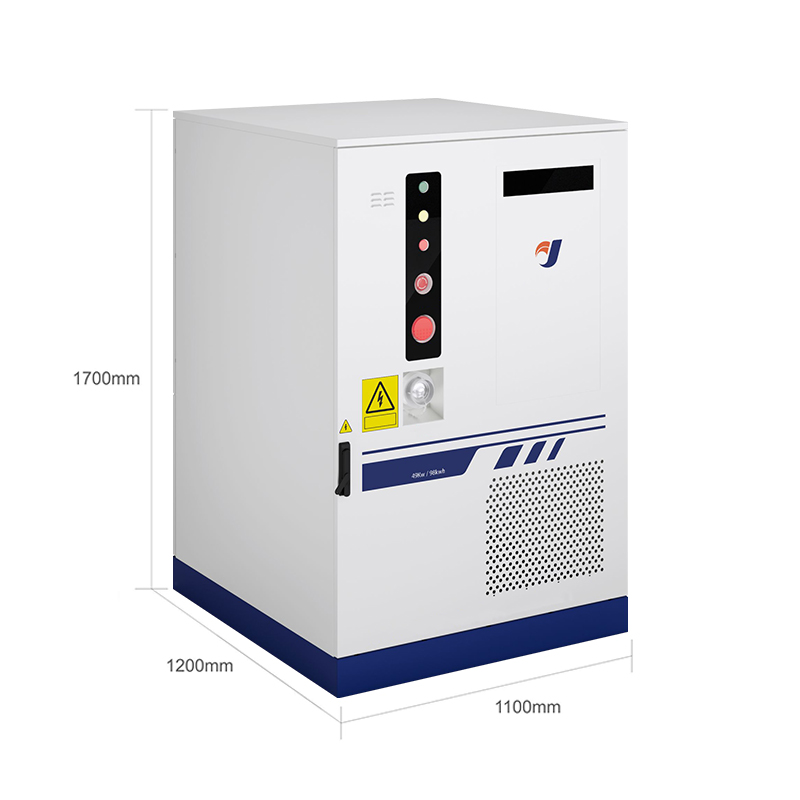 49 kW Liquid-Cooled Energy Storage Cabinet for Commercial SitesThis liquid-cooled, all-in-one cabinet suits spaces needing high energy density with a compact footprint. Its integrated thermal management and monitoring support peak shaving and backup, making it practical for small commercial buildings or large residences.View Product →
On sites where generation comes from both solar and wind, the intermittency curve is different from a conventional rooftop solar array. A larger buffer, such as a 100 kW wind-energy storage system, can smooth production dips and reduce peak demand without forcing you to add another wall-mounted unit.
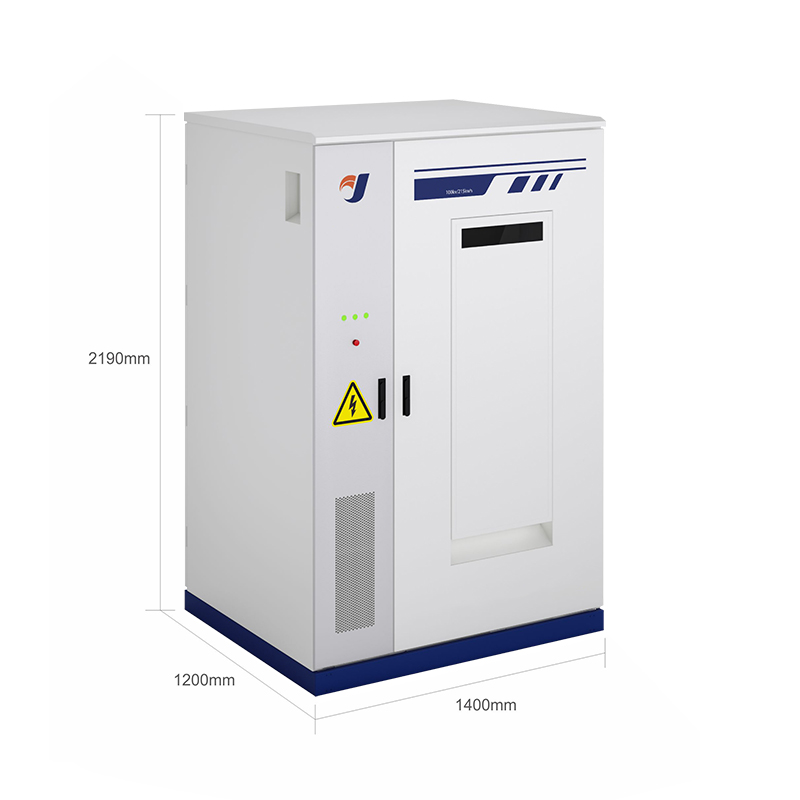 100 kW Air-Cooled Wind Energy Storage CabinetDesigned for wind-integrated sites, this cabinet smooths renewable generation dips and reduces peak demand. With modular expansion and hybrid support, it offers a practical buffer for facilities combining solar and wind without adding extra wall-mounted units.View Product →
Larger commercial and industrial sites with demand charges or critical process loads need more continuous power. A 125 kW liquid energy storage system is designed for peak shaving, backup, and load shifting in facilities with HVAC, pumps, or charging equipment.
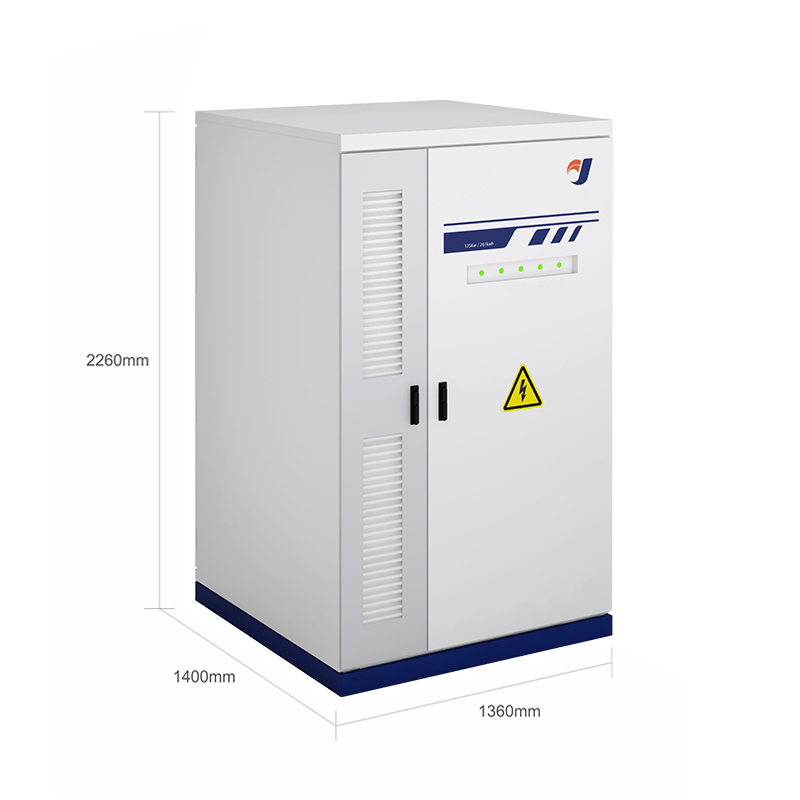 125 kW Liquid Energy Storage Cabinet for Industrial LoadsThis liquid-based storage system provides continuous power for facilities with HVAC, pumps, or charging equipment. It supports peak shaving, backup, and load shifting, and sourcing the enclosure from a fabricator allows customization before electrical components are finalized.View Product →
These systems are not consumer gadgets. They are project-specific energy assets. But they solve the same fundamental problem as a residential battery: storing electricity so the facility does not depend on the grid at peak times. For a project manager or an installer, sourcing the cabinet directly from a metal fabricator means the enclosure design, coating, and customization can be resolved before the electrical equipment is ordered.
Integration Checklist Before You Buy
Replacing a wall-mounted all-in-one approach with a cabinet plus separate electronics still requires integration planning. The following items will save you from surprises during installation:
- AC or DC coupling with the existing solar inverter
- Battery management system communication protocol
- Location of the backup loads panel
- Transfer switch logic and neutral switching requirements
- Ventilation and clearance distances around the cabinet
- Local electrical inspection and permitting requirements
The most common mistake is choosing a battery first and working out integration later. A useful alternative is selected after an electrician reviews the site, the load panel, the grounding system, and the inverter. That review also determines whether the system needs an additional subpanel, a modified transfer switch, or a separate isolation transformer.
How to Qualify a Supplier
Even if the electrical design is sound, the supplier determines whether the system lasts. For a floor-standing cabinet, ask for specific answers on material thickness, coating process, hinge durability, cable gland quality, and the IP rating of every access panel. If the supplier cannot answer these questions, the alternative is not attractive no matter how low the price is.
A manufacturer with in-house research and fabrication capacity is preferable to a trading company. You want a partner that can modify the cabinet during production, not a vendor that treats the enclosure as a black box. Robotic welding, laser cutting, and automatic coating lines are not just marketing language; they are the processes that keep tolerances consistent across a production run.
Production capacity also matters. A facility with tens of thousands of square meters of manufacturing space and automated equipment is more likely to meet project deadlines than a small assembly shop. Ask for lead times in writing, and confirm how the supplier handles revisions to the cabinet drawing. A metal enclosure often needs small changes after a site walk-through, and a responsive manufacturer reduces the risk of a delayed energy storage project.
The best alternative to Tesla Powerwall is not the lowest-priced unit or the one with the most polished brochure. It is the system that matches the load profile, fits the available space, and is built by a manufacturer with the equipment and discipline to make it reliable. A standalone energy-storage cabinet, fabricated by a metal specialist and paired with the right inverter, gives you that control without forcing you into a fixed battery size or a closed ecosystem.

Contact Us Now
News
LET’S BUILD YOUR CUSTOMIZED PRODUCT

Copyright ©Zhejiang Jiangnan Outdoor Products Co., Ltd.All rights reserved.
