


 English
 中文简体
中文简体1. Material Selection and Weather Resistance in Outdoor Furniture Choosing the right material is the...
READ MOREBattery Management System for Lithium Batteries: What It Does and Why You Need It
Author: Admin
Date: Sep 28,2026
A lithium battery pack in an industrial storage unit rarely fails without early warning. Cell voltages drift apart by a few millivolts, internal resistance climbs, and temperature readings at one end of the pack begin to diverge from the rest. Without a battery management system for lithium batteries, those signals disappear into the noise, and the pack keeps running until a weak cell pulls the entire string down, trips a protection device, or enters thermal runaway.
Before you specify or buy a lithium-based system, understand this: the BMS is not an optional accessory. It determines how safely, how efficiently, and how long the battery performs. Neglecting it is one of the most common mistakes in battery procurement, and one of the most expensive to correct later.
Content
- 1 What a Battery Management System for Lithium Batteries Does
- 2 Key BMS Functions You Should Understand
- 3 How to Evaluate a BMS: Specifications That Matter
- 4 Enclosure Design Determines What the BMS Can Achieve
- 5 Scaling from Small Storage to Renewable Integration
- 6 A Practical Path to a Reliable Battery System
What a Battery Management System for Lithium Batteries Does
A battery management system is an electronic control system that supervises every cell in a lithium battery pack. It measures voltage, temperature, and current continuously, compares the readings against safe operating limits, and takes action when any value exceeds its limit.
Its core duties include:
- Monitoring voltage at the individual cell level
- Measuring pack current and temperature
- Estimating state of charge and state of health
- Balancing cell voltages so no cell is overworked
- Disconnecting or signaling the host system when a fault occurs
- Communicating with chargers, inverters, or an energy management system
A BMS can be centralized, with a single controller handling all cells, or distributed, with a monitoring board per module and a master controller on top. Modular architectures are common in larger storage systems because they reduce wiring and allow the system to isolate a faulty module without shutting down the entire pack.
Lithium chemistry delivers high energy density but tolerates little abuse. Overcharging a lithium cell beyond its rated voltage can cause metallic lithium plating, gas generation, and a higher risk of fire. Discharging below the cutoff voltage causes copper dissolution and irreversible capacity loss. Extreme temperatures damage the electrolyte and the separator, and high discharge rates add internal heat that accelerates both. The BMS is the intelligence that keeps the chemistry inside its safe operating window.
Key BMS Functions You Should Understand
Cell Monitoring and State Estimation
Cell voltage readings are the foundation of every decision the BMS makes. Accurate measurement, typically within a few millivolts, allows the BMS to calculate state of charge using Coulomb counting combined with voltage correction. State of health tracking follows capacity fade and internal resistance growth, helping operators predict remaining useful life and schedule maintenance before failure.
Protection and Fault Response
A BMS protects against overvoltage, undervoltage, overcurrent, short circuit, overtemperature, and undertemperature. The response can be a soft command to the inverter or charger, or a hard disconnect through a contactor. Protection thresholds must match the cell manufacturer's datasheet; generic presets are a common source of nuisance trips or, worse, inadequate protection.
Cell Balancing
Cells in a pack are never truly identical. Manufacturing tolerances, temperature gradients, and aging create voltage differences that reduce usable capacity. Passive balancing burns surplus energy from higher-voltage cells as heat; it is simple and inexpensive. Active balancing transfers charge between cells, recovering energy and working faster, but adds cost and complexity. For large packs with frequent high-rate cycling, active balancing usually pays for itself in recoverable capacity. In practice, weak balancing shows up after repeated partial cycles, when the pack gradually loses usable capacity even though the cells themselves remain healthy.
How to Evaluate a BMS: Specifications That Matter
Feature lists look similar across vendors, so compare measured numbers rather than marketing language. The table below lists the parameters with the largest impact on safety and pack longevity.
| Parameter | Why It Matters | What to Check |
|---|---|---|
| Voltage measurement accuracy | Directly affects SOC accuracy and protection timing | Look for 5 mV per cell or better |
| Balancing current | Determines how quickly cells are equalized | Passive systems: 50 to 150 mA; active systems: 0.5 A and above |
| Current sensing method | Governs overcurrent protection and SOC estimation | Shunt resistors offer accuracy; Hall-effect sensors offer isolation |
| Temperature sensing points | Detects hotspots and supports thermal management | Confirm the number and placement of NTC sensors |
| Communication protocol | Determines compatibility with inverters and EMS | CAN bus is common; Modbus and RS-485 are typical for storage |
| Protection functions | Defines fault behavior | Verify overvoltage, undervoltage, overcurrent, and temperature limits |
Purchasing risk usually appears when a vendor pairs a high-capacity cell with a low-cost BMS that has weak balancing capability or imprecise voltage sensing. The BMS must match the cell chemistry, the series-cell count, and the duty cycle of the application. Ask for test reports that show balancing behavior under load, not just at rest, and confirm that temperature sensors cover the hottest points in the pack. Also consider the manufacturer's field track record: a BMS design that has survived years of real installations is worth more than a feature list from a product that has never left the lab.
Enclosure Design Determines What the BMS Can Achieve
A BMS cannot fix mechanical problems. If battery cells are poorly supported, terminals are stressed by vibration, or the enclosure lets in moisture, the BMS can only report damage after it happens. The physical enclosure and the battery management system are two halves of the same engineering problem.
Rigid sheet metal construction keeps cells and busbars fixed in position, preserves electrical isolation, and creates a controlled path for cooling. Liquid cooling is the preferred approach for high-power systems because it removes heat directly from the cell surfaces and keeps temperature gradients small. When cells stay close to the same temperature, balancing works faster and state of charge is easier to estimate.
Cable entry points, grounding studs, cooling ports, and handling features all affect assembly quality and service life. A poorly designed enclosure can even generate electromagnetic interference that disturbs the BMS's own voltage readings.
For a 125 kW liquid-cooled energy storage system, the BMS operates inside a structure that also handles high-current paths, cable management, and ingress protection. The cabinet is not a box around the battery; it is a structural part of the electrical design.
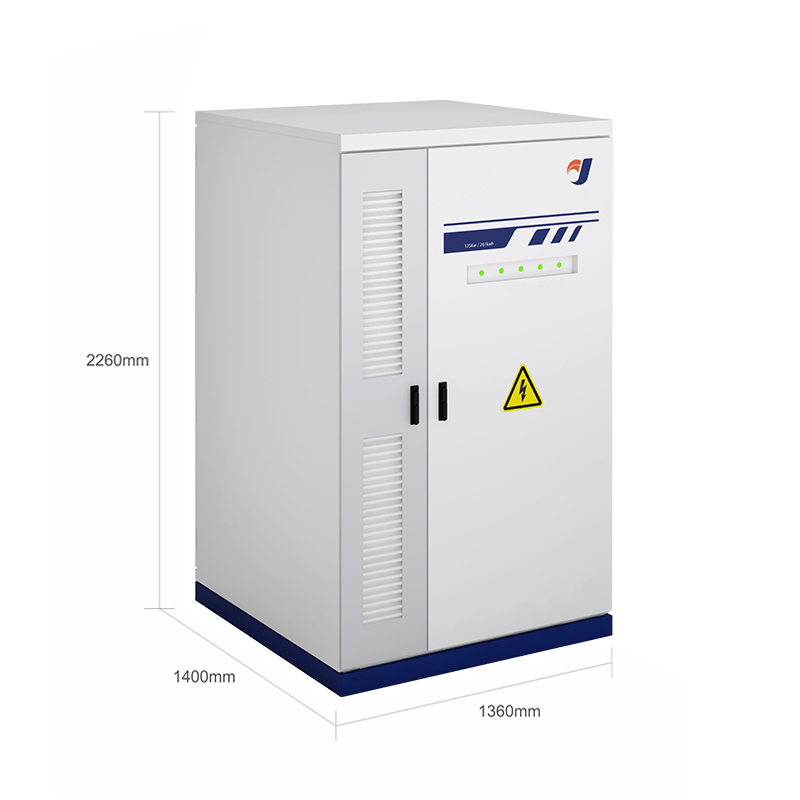 125 kW Liquid-Cooled Energy Storage Cabinet with Integrated BMSThis 125 kW liquid-cooled cabinet integrates battery modules, thermal management, and high-current paths. Its structural design supports reliable BMS operation and safe, efficient energy storage for commercial or grid applications.View Product →
Scaling from Small Storage to Renewable Integration
Smaller systems follow the same logic. A 49 kW liquid-cooled unit used for backup power or peak shaving still depends on accurate cell monitoring, thermal management, and mechanical stability, just within a tighter footprint.
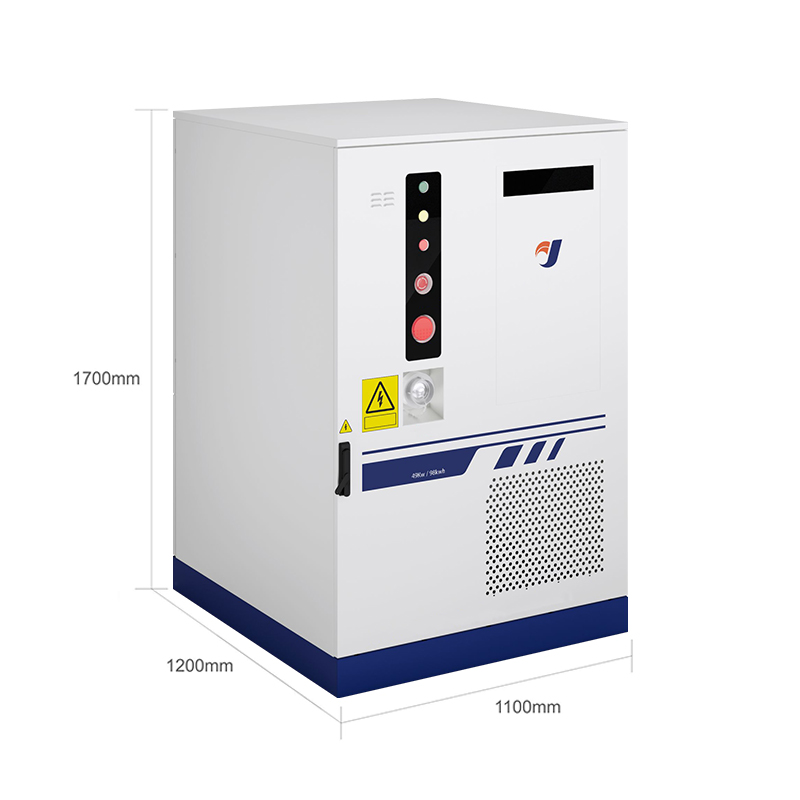 49 kW Liquid-Cooled Energy Storage Cabinet for Compact InstallationsA compact 49 kW liquid-cooled storage unit suited for backup power and peak shaving. Its tight footprint still demands precise cell monitoring, thermal management, and mechanical stability, making it a practical choice for limited spaces.View Product →
Renewable applications add another layer of complexity. A wind energy storage system sees irregular charge cycles driven by changing wind conditions, which demands precise state-of-charge estimation and fast fault response. Outdoor installation means wide temperature swings and humidity exposure, so the enclosure must protect the electronics while the BMS protects the cells.
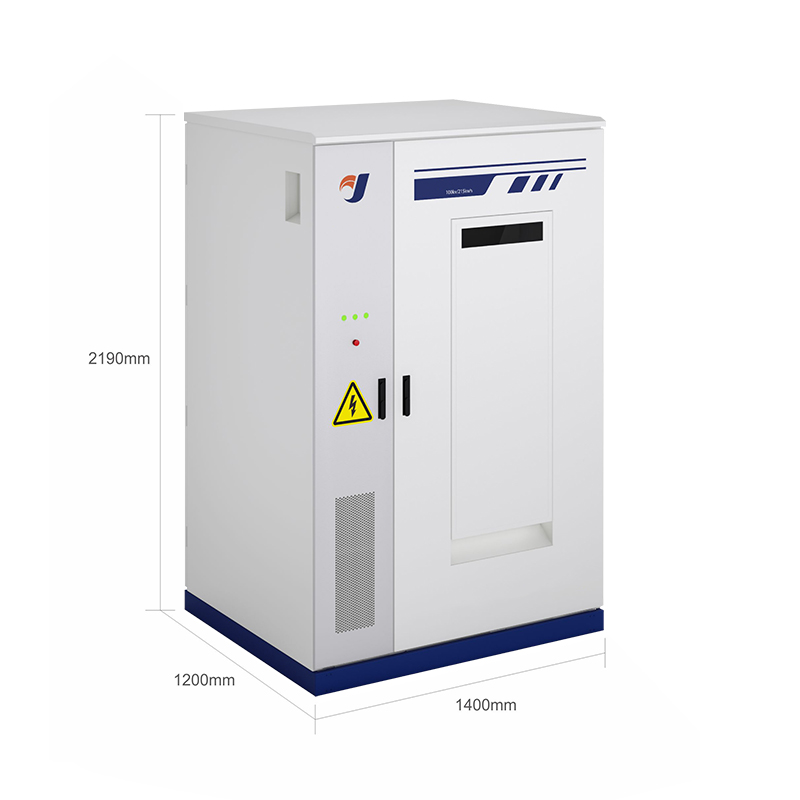 100 kW Air-Cooled Energy Storage Cabinet for Wind SystemsDesigned for wind power integration, this 100 kW air-cooled cabinet smooths generation fluctuations and supports off-grid or hybrid operation. Its modular construction eases expansion for remote or renewable energy projects.View Product →
A Practical Path to a Reliable Battery System
Start with the application. Define voltage range, continuous and peak current, ambient temperature range, and expected cycle life. These numbers dictate cell configuration and, in turn, BMS requirements. Then confirm that the same manufacturer applies equal rigor to the enclosure as to the electrical design.
Sheet metal quality affects grounding continuity, mounting stability, shielding, and long-term corrosion resistance. A fabricator with hands-on experience in metal cabinet design and production catches issues that an electrical integrator may overlook, such as sharp edges near cable harnesses, weak weld penetration on brackets, or paint failures in humid climates.
The manufacturer behind these energy storage cabinets brings more than four decades of sheet metal fabrication experience, automated laser cutting, robotic welding, and ISO 9001 quality management to the assembly of battery enclosures. That experience matters because a BMS can issue the right commands, but the cabinet determines whether those commands stay accurate in the field.
Evaluate the BMS and the enclosure as one system. Ask for voltage measurement accuracy, balancing current, protection thresholds, and enclosure ingress protection rating in the same document. When both sides are designed to the same standard, the lithium battery pack runs safer, lasts longer, and costs less to maintain.

Contact Us Now
News
LET’S BUILD YOUR CUSTOMIZED PRODUCT

Copyright ©Zhejiang Jiangnan Outdoor Products Co., Ltd.All rights reserved.
