


 English
 中文简体
中文简体1. Material Selection and Weather Resistance in Outdoor Furniture Choosing the right material is the...
READ MOREBESS Manufacturing: Enclosure Fabrication, Coating Quality, and Lead Times
Author: Admin
Date: Oct 10,2026
A storage project rarely fails in the order people expect. Cells are specified to death, the power conversion system is signed off after weeks of modelling, and the cabinet holding everything is described in six lines of a bill of materials. Then the delivery date slips, and the reason is steel.
In BESS manufacturing, the enclosure is the longest-lead, most variable, and least standardised part of the product. Cells come from a small group of qualified global producers working to published datasheets. Cabinets come from fabricators working to a drawing, a coating line, and a welder's steady hand. Everything that shortens a storage asset's life outdoors, from corrosion to water ingress to a failed bond, is decided long before the first module goes in.
Content
- 1 What the Enclosure Must Do in BESS Manufacturing
- 2 Specifications That Decide Whether a Cabinet Lasts
- 3 Cabinet Types and What Each One Demands
- 4 From Coil to Container: The Fabrication Sequence
- 5 Quality Evidence Worth Asking For
- 6 Capacity, Lead Time, and Supply Chain Reality
- 7 How to Shortlist an Enclosure Partner
What the Enclosure Must Do in BESS Manufacturing
The cabinet is a structural, environmental, thermal, and electrical component at the same time. Treating it as a box with a door is where projects lose weeks.
Structurally, a populated cabinet can weigh several tonnes. Base frames, rack supports, and lifting points carry transport vibration and, in some markets, seismic loads. Panel thickness and rib placement decide whether the unit arrives square or with door gaps no gasket can close.
Environmentally, ingress protection is a system rather than a rating. A gasket compressed correctly on assembly day can take a permanent set after two years of daily pressure swings and thermal cycling. Coastal and industrial sites add salt and dust, which attack cut edges and fastener holes first.
Electrically, powder coating is an insulator. Grounding depends on masked studs, internal bonding straps, and star washers that bite through the finish. A cabinet reading more than a few tenths of an ohm from door to frame will fail a site inspection, and retrofitting a bonding point after coating costs far more than masking it beforehand.
Cooling architecture adds another layer of metalwork. A compact liquid-cooled design shows the pattern: manifold brackets, drain paths routed away from live parts, and local stiffening at cold-plate mounting points instead of a heavier panel everywhere.
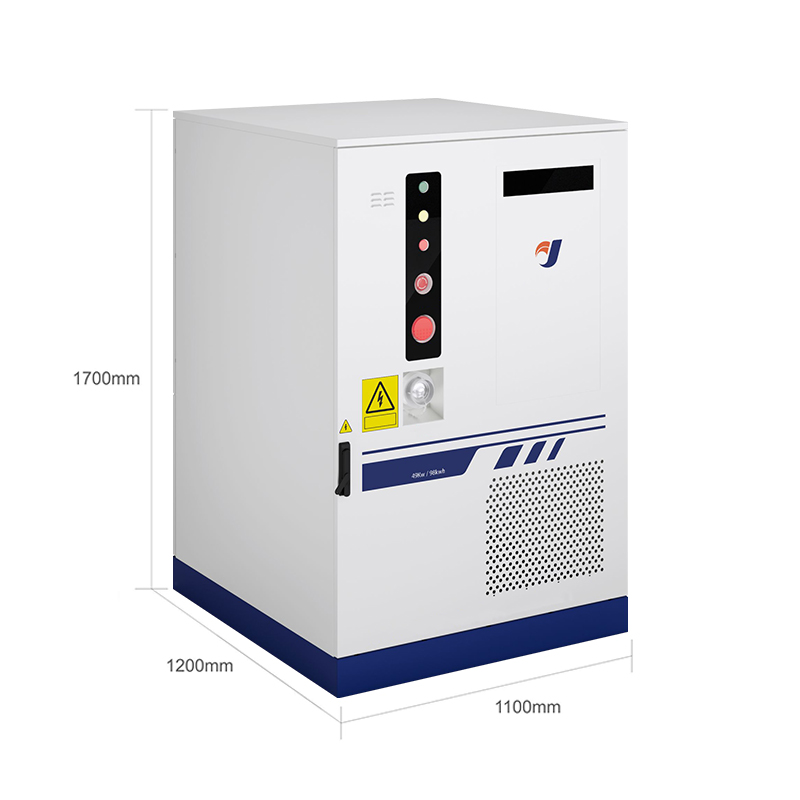 49 kW Liquid-Cooled Energy Storage CabinetCompact 49 kW/98 kWh liquid-cooled steel cabinet with integrated monitoring; relevant when assessing enclosure durability and scalable commercial storage in tight sites.View Product →
Specifications That Decide Whether a Cabinet Lasts
Most enclosure failures trace back to substitutions made at quotation stage. The parameters below separate a fifteen-year cabinet from a five-year one. The values are typical ranges from general industry practice rather than figures from one project.
| Parameter | Typical requirement | Why it matters | Failure when skipped |
|---|---|---|---|
| Base steel | Zinc-coated or hot-dip galvanised sheet, 1.5 to 2.5 mm, mill certificate traceable to the batch | Sets stiffness and cut-edge corrosion resistance | Uncoated sheet rusts along laser-cut edges within one to two years |
| Corrosion class | C3 for sheltered inland sites, C4 or C5-M for coastal and offshore (ISO 12944) | Determines coating build-up, not just colour | A C3 system on a coastal site blisters within about two years |
| Pretreatment | Multi-stage wash with zinc phosphate or zirconium conversion before powder | Controls adhesion and salt-spray performance | Coating flakes at damaged edges and around fasteners |
| Powder coating | 60 to 120 microns dry film, measured across the panel including welds and corners | Barrier performance and colour retention | Thin zones at corners become corrosion initiation points |
| Sealing | Formed-in-place or die-cut EPDM gaskets with a specified compression range, IP54 to IP55 typical | Water and dust ingress control | Compression set opens a path to the lowest point in the cabinet |
| Grounding | Masked bonding points, star washers, continuity below 0.1 ohm | Fault current path | High resistance at bolted joints; fails electrical safety checks |
| Fasteners | Stainless or zinc-nickel plated, isolated where metals differ | Avoids galvanic corrosion | Fasteners corrode before panels do, staining and loosening |
Cabinet Types and What Each One Demands
Three enclosure families dominate outdoor storage, and each loads the fabrication shop differently.
Air-cooled cabinets
These rely on fans, filters, and louvres, all sheet metal features with tight tolerances. Filter housings must seal to the panel, and ducting has to keep hot exhaust away from intake air. Filter changes drive the maintenance schedule, so front service access matters more than most drawings admit.
Liquid-cooled cabinets
Coolant manifolds and cold plates turn the cabinet into a pressure boundary. Leak paths must drain away from busbars and electronics, and mounting surfaces need a flatness a general-purpose enclosure does not deliver. Seams near the coolant loop are usually tested far more strictly than structural seams.
Renewable-coupled and remote installations
Wind and hybrid projects push cabinets far from service centres, with wider temperature swings, higher vibration, and longer gaps between inspections. That argues for heavier corrosion protection, fewer field-fastened joints, and designs where a whole unit can be lifted and swapped rather than repaired on site. A wind energy storage system rated around 100 kW is a typical platform in this class.
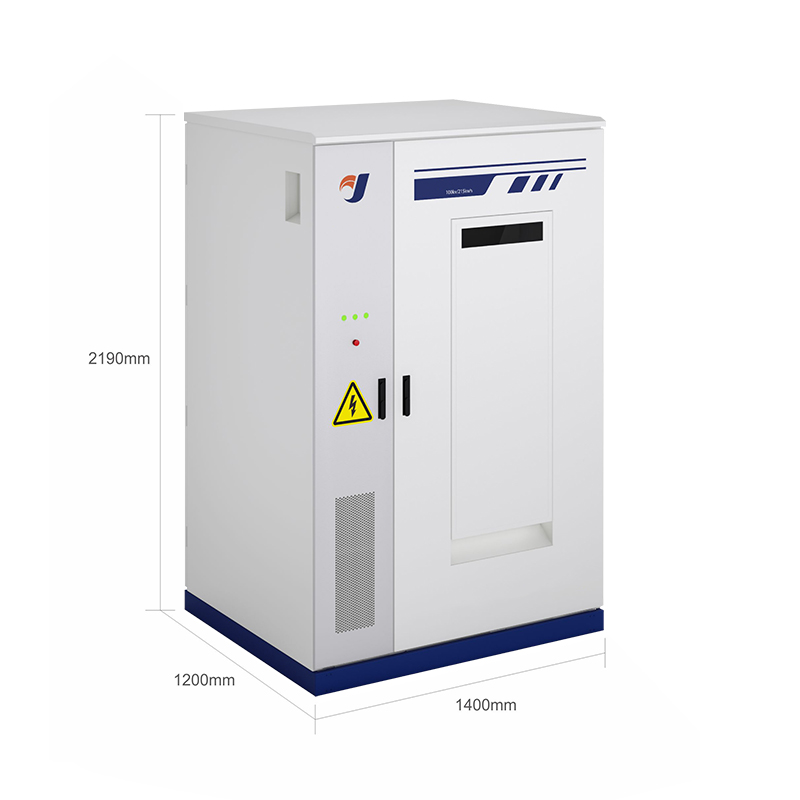 100 kW Air-Cooled Energy Storage Cabinet for Wind PowerSteel 100 kW/215 kWh air-cooled cabinet for wind power, supporting modular expansion and remote, off-grid, or hybrid commercial/industrial installations.View Product →
From Coil to Container: The Fabrication Sequence
Any enclosure supplier should be able to walk you through this sequence, station by station. If a step is outsourced, both the lead time and the quality risk move to a third party.
- Design review and DFM: rack loads, cable routing, service clearance, and lifting points checked against the fabrication method before anything is cut.
- Cutting: fibre laser for 1 to 3 mm sheet, nested to control material use and keep heat distortion predictable.
- Forming: CNC press brakes with a fixed bend sequence, typically holding a few tenths of a millimetre on critical dimensions.
- Welding: robot MIG or TIG for repeatable seams, manual work on visible faces, spatter removed before coating.
- Pretreatment and coating: degrease, rinse, conversion coating, dry-off, powder application, controlled cure.
- Gasket and hardware fitting: controlled-compression gaskets, masked earth points, recorded fastener torques.
- Assembly and test: racks, cooling hardware, and harnesses installed, then functional and insulation testing.
- Packing: VCI film, desiccant, edge protection, and sea-worthy packing sized for the transport mode.
Quality Evidence Worth Asking For
Certificates describe a management system, not your order. Ask for the records that belong to the specific batch.
- Steel mill certificates, EN 10204 3.1 or equivalent, traceable to the panels used.
- Welding procedure specifications, welder qualifications, and dye-penetrant results on critical seams.
- A first-article dimensional report covering door gaps, diagonals, and mounting hole positions.
- Dry film thickness readings across the panel, plus salt-spray results to ISO 9227 for the coating system.
- Gasket compression data and a hose test on a representative unit.
- Grounding continuity measurements taken before and after coating.
- A factory acceptance test record covering insulation resistance plus functional checks of fans, sensors, and interlocks.
Suppliers working under a formal management system, such as a manufacturer holding ISO 9001, ISO 14001, and ISO 45001 certification, tend to release these documents without a fight, which shortens approval cycles considerably.
Capacity, Lead Time, and Supply Chain Reality
Two questions predict delivery performance better than any factory tour. Who owns the coating line, and how many welding stations can be assigned to your volume? Outsourced coating adds one to three weeks and removes your ability to inspect the finish before assembly.
Coating lines are batch equipment. Frequent colour changes cost setup time, so consolidating cabinet colours across a project is a cheap way to protect the schedule. On the material side, coil lead times and mill rolling schedules move independently of your project plan, which is why early steel allocation matters on orders above a few dozen units.
Fabrication hours scale with platform size, not unit count alone. A 125 kW liquid-cooled cabinet takes more forming, welding, and coating time than a small auxiliary cabinet, and it deserves its own workstream in the plan.
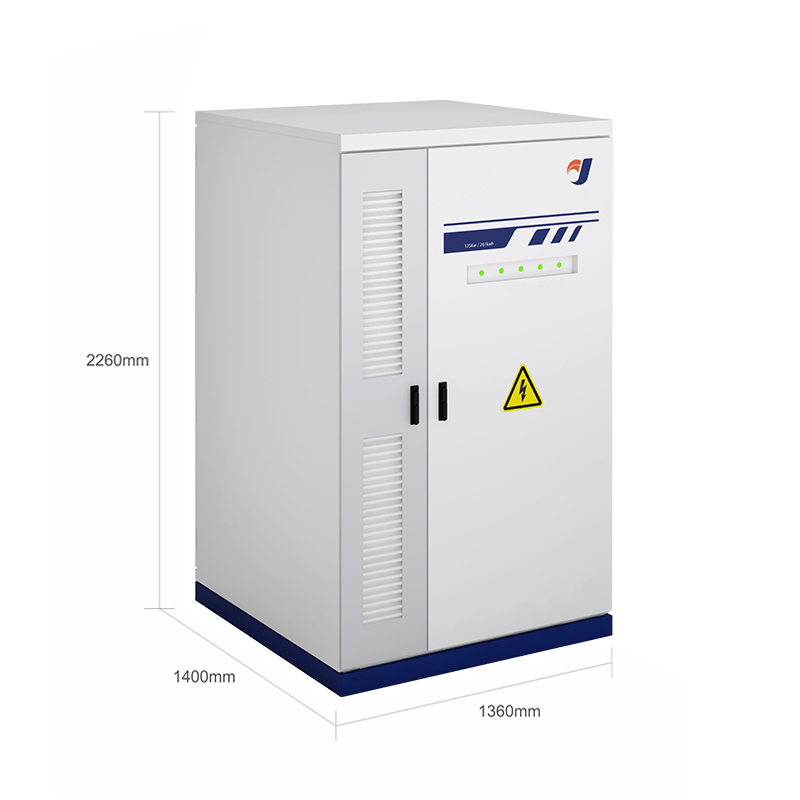 125 kW Liquid-Cooled Energy Storage CabinetSteel 125 kW/261 kWh liquid-cooled cabinet for commercial, industrial, renewable-integration, and grid-stabilization duties; larger platform needing dedicated fabrication planning.View Product →
The breadth of the energy storage cabinet range shows how many platform sizes a single fabrication line has to support.
How to Shortlist an Enclosure Partner
- Confirm that cutting, forming, welding, and coating all happen in-house, and map any subcontracted steps.
- Ask for a fabrication hour breakdown per cabinet type; it reveals whether the quoted price is realistic.
- Match the corrosion class to the actual site, not to the cheapest comparable project in the region.
- Review bonding and grounding details before prototype, while masking points are still free to change.
- Watch a live batch: gasket fitting and coating thickness checks say more than any certificate.
- Agree the order-specific documentation list at quotation stage rather than at delivery.
BESS projects are usually won on cells and lost on cabinets. The fix is unglamorous: treat the enclosure as a critical-path item, specify it against the site rather than the price, and audit the fabrication sequence before the first sheet is cut. Teams that do this spend far less time explaining schedule slips.

Contact Us Now
News
LET’S BUILD YOUR CUSTOMIZED PRODUCT

Copyright ©Zhejiang Jiangnan Outdoor Products Co., Ltd.All rights reserved.
