


 English
 中文简体
1. Material Selection and Weather Resistance in Outdoor Furniture Choosing the right material is the...
READ MOREIndustrial Scale Battery Storage: Enclosure Design, Sizing, and Procurement
Author: Admin
Date: Oct 26,2026
A 20-foot battery enclosure that arrives 6 mm out of square can cost more in site rework than the cells inside it. That is why buyers of industrial scale battery storage should start with the enclosure, thermal path, and factory test record, not a data sheet headline. The most reliable projects treat the battery cabinet as an engineered piece of equipment: structurally stiff, serviceable, and documented.
The safest buying decision is to qualify the enclosure and integration partner before comparing cell chemistry. Cells set cycle life; the enclosure determines whether that cycle life survives transport, humidity, vibration, and daily thermal cycling.
Content
What Industrial Scale Battery Storage Includes
At project level, industrial scale battery storage is not one box. It combines battery modules, racks, a battery management system, power conversion, switchgear, thermal management, fire detection and suppression, controls, and the enclosure that ties them together. Cabinet-scale systems in the 49 kW to 125 kW range suit commercial buildings, industrial parks, microgrids, and wind or solar sites. Containerized systems take the same building blocks to multi-megawatt projects.
Public trackers now count hundreds of operational battery storage projects in the U.S. alone, and capacity is measured in gigawatts rather than pilot units. That scale changes procurement. A missing torque mark or an undersized cable gland is no longer a minor defect; it becomes a commissioning delay across a fleet.
| System scale | Typical form | Common use | Main procurement check |
|---|---|---|---|
| 49 kW liquid-cooled cabinet | Single cabinet | Commercial buildings, small microgrids, retrofit rooms | Door swing, cooling clearance, floor loading |
| 125 kW liquid-cooled cabinet | Larger cabinet or compact skid | Industrial parks, charging hubs, peak shaving | Coolant routing, leak containment, lifting points |
| 100 kW wind storage | Cabinet or skid | Wind farm ancillary loads, smoothing, off-grid support | Vibration, temperature range, remote diagnostics |
| Containerized MW system | 20-foot or 40-foot container | Utility, grid, and large industrial sites | Fire separation, transport permits, foundation flatness |
Why the Enclosure Often Decides Project Risk
Battery enclosures look simple from the outside: folded steel, doors, hinges, and a paint finish. In service they carry heavy modules, resist wind and rain, route liquid cooling lines, separate live equipment, and support maintenance access. A door that drops 2 mm after transport can jam a latch. A coating that fails at a cut edge can start corrosion around a mounting hole. A cooling line that touches sheet metal can rub through under vibration.
For many cabinet-scale units, 1.5 mm to 2.0 mm galvanized steel is common; larger skids often use 2.5 mm steel or added structural ribs. Buyers should ask for flatness checks, weld quality records, door gap tolerances, earthing continuity, and coating performance for the intended corrosion category. In coastal or humid sites, a C4 or C5 paint system and sealed cable entries matter more than a glossy finish.
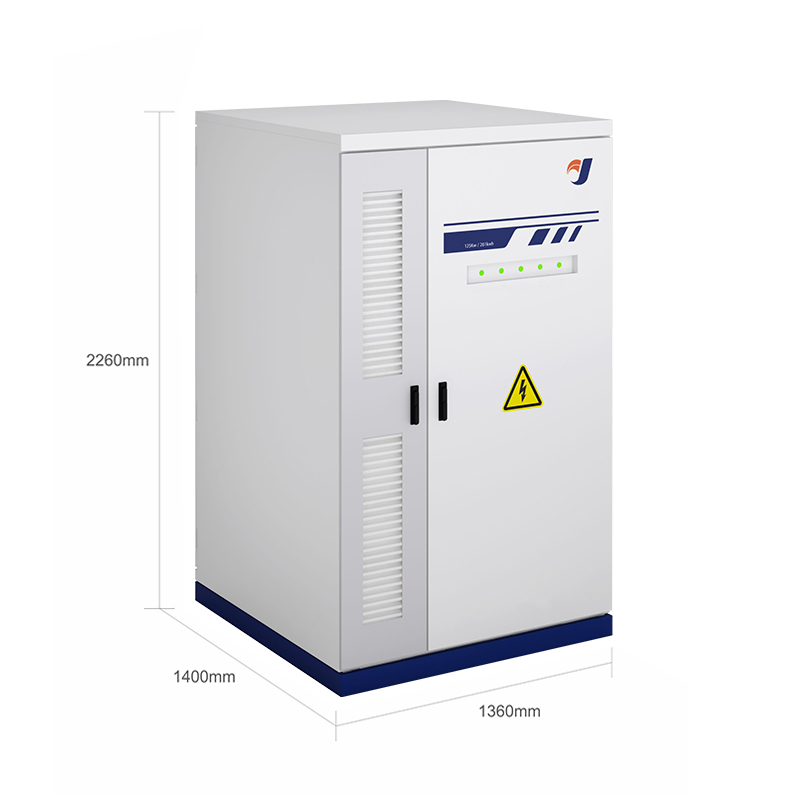 Liquid-Cooled 125 kW Energy Storage CabinetA modular 125 kW/261 kWh steel cabinet with liquid-cooled battery thermal management, suited to C&I sites where enclosure finish and maintenance access are being assessed.View Product →
The enclosure also sets serviceability. A liquid-cooled cabinet needs room for pump access, leak inspection, filter changes, and hose routing. If the design packs those items behind a battery rack, routine maintenance becomes a shutdown. Good layouts keep power cables, signal cables, and coolant lines separated and labeled.
Matching Form Factor to Site Conditions
Cabinet-scale storage is often the practical choice when the site has an existing electrical room, limited yard space, or a phased build-out. A 49 kW liquid-cooled cabinet can fit through a standard service door and be commissioned without a crane. That matters in commercial retrofits where the transformer and switchgear are already fixed.
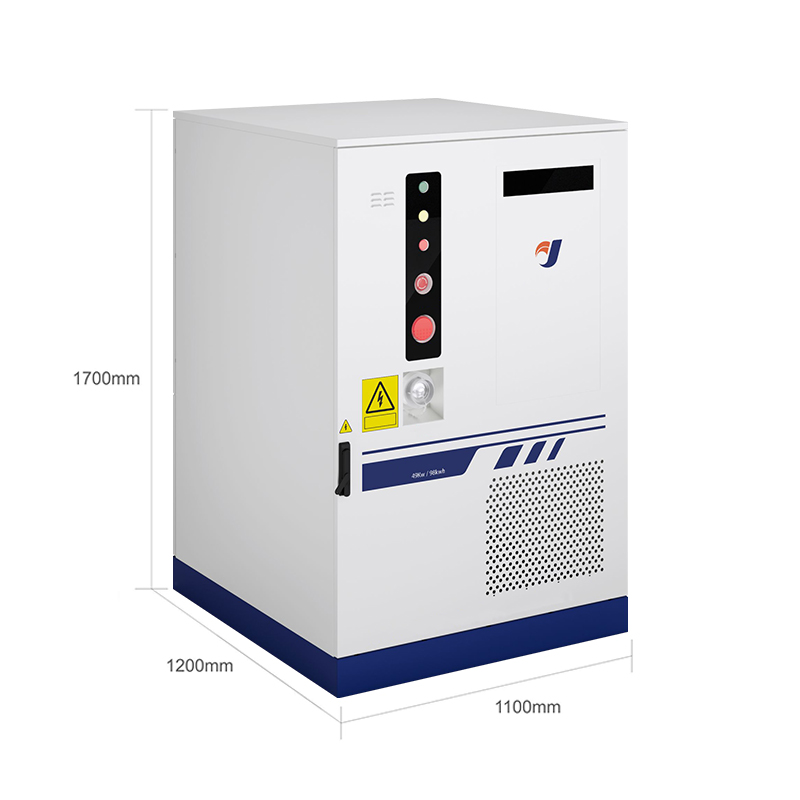 Compact Liquid-Cooled 49 kW Energy Storage CabinetAn all-in-one 49 kW/98 kWh steel cabinet for space-constrained commercial retrofits, integrating liquid-cooled batteries, power conversion, and monitoring for easier deployment.View Product →
Wind sites have a different profile. They need wide-temperature operation, vibration tolerance, remote diagnostics, and enclosures that can handle cyclic loading. A 100 kW wind storage cabinet may support smoothing, ancillary loads, or off-grid resilience, but the enclosure and controls must be specified for the site's wind and humidity exposure.
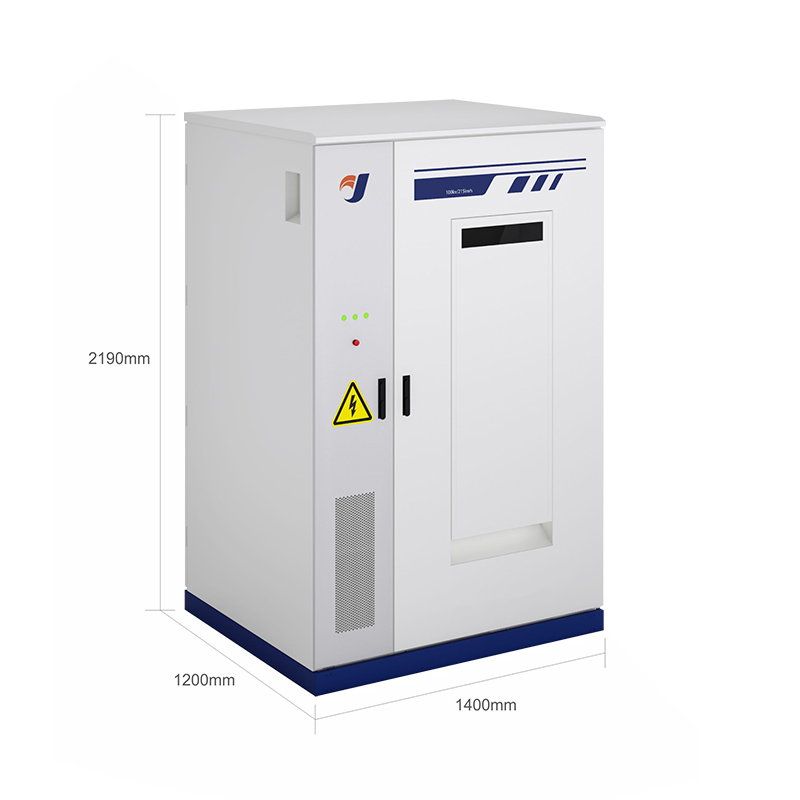 Air-Cooled 100 kW Wind Energy Storage CabinetA 100 kW/215 kWh steel cabinet for wind applications, using air-cooled battery thermal management to support smoothing, off-grid operation, and modular renewable projects.View Product →
For projects above a few hundred kilowatts, containerized systems usually win on cost per kilowatt-hour and factory integration. The trade-off is transport and site planning: foundation flatness, fire separation, cable trench routing, and crane access must be settled before the container arrives.
Procurement Checklist for Industrial Scale Battery Storage
Use a checklist that forces evidence, not just confirmation. The items below are the ones that most often separate a smooth commissioning from a field correction list.
- Electrical architecture: confirm DC voltage window, power conversion compatibility, short-circuit rating, isolation, and protection coordination.
- Thermal design: compare air and liquid cooling, ambient derating, coolant maintenance, and leak containment.
- Fire and gas safety: require detection, suppression, pressure relief, and separation details for the actual site.
- Enclosure: specify steel gauge, coating system, ingress protection, earthing, and corrosion category.
- Documentation: ask for test reports, drawings, labels, and evidence against relevant standards such as IEC 62933-5-2 or UL 9540 where applicable.
- Factory acceptance: witness insulation resistance, polarity, leak tests, torque marking, and control logic checks before shipment.
- Logistics and commissioning: agree lifting points, transport shock limits, spare parts, and remote support terms.
Manufacturing Details That Reduce Field Work
Field labor is expensive, and every cable pulled on site adds risk. A factory that can cut, weld, coat, and pre-assemble the enclosure under one roof has more control over fit-up and finish. Zhejiang Jiangnan Outdoor Products Co., Ltd. operates more than 50,000 square meters of production space with over 200 employees and more than 40 years of metal manufacturing experience. Its battery cabinet work draws on laser cutting, robot welding, automated coating, and pre-assembly, which helps keep door alignment, hole positions, and cable entries consistent from unit to unit.
The company holds ISO 9001, ISO 14001, and ISO 45001 certifications and has been recognized as a national high-tech enterprise and a Jiaxing green factory. Those credentials do not replace project-specific testing, but they give buyers a documented quality and environmental process to audit. The energy storage cabinet range includes liquid-cooled and wind-focused units, so the enclosure, cooling interface, and service access can be reviewed together rather than sourced separately.
Ask for a pre-production sample or first-article inspection on any custom cabinet. Check the door swing with modules installed, confirm that coolant lines clear sharp edges, and verify that labels match the as-built drawing. These checks take hours at the factory and can save weeks in the field.
Industrial scale battery storage projects succeed when the enclosure, thermal system, and factory evidence are treated as part of the energy asset. Start with the site constraints, match the form factor to the load and service plan, and require documented tolerances before shipment. The cell chemistry will change over the project life; a well-built enclosure and a clear procurement record will keep paying back.

Contact Us Now
News
LET’S BUILD YOUR CUSTOMIZED PRODUCT

Copyright ©Zhejiang Jiangnan Outdoor Products Co., Ltd.All rights reserved.
