


 English
 中文简体
中文简体1. Material Selection and Weather Resistance in Outdoor Furniture Choosing the right material is the...
READ MOREMetal Auxiliary Cabinets: Industrial Storage & Organization Solutions
Author: Admin
Date: Feb 19,2026
Content
- 1 Metal Auxiliary Cabinets Deliver Robust, Purpose-Built Storage
- 2 Core Design Features That Define Performance
- 3 Material and Finish Options for Specific Environments
- 4 Functional Configurations for Workflow Optimization
- 5 Security and Compliance Considerations
- 6 Integration with Lean Manufacturing Principles
- 7 Total Cost of Ownership Advantages
- 8 Selecting the Right Cabinet for Your Application
Metal Auxiliary Cabinets Deliver Robust, Purpose-Built Storage
Metal auxiliary cabinets are engineered for demanding environments where reliability, security, and organization are non-negotiable. Unlike standard cabinetry made from wood or particleboard, these units feature welded or bolted steel construction—typically 18–22 gauge cold-rolled steel—with reinforced corners and tamper-resistant hardware. They serve as essential support storage adjacent to primary workstations in manufacturing plants, laboratories, warehouses, and maintenance facilities. Independent durability tests show properly specified metal auxiliary cabinets withstand over 10,000 open-close cycles without hinge failure, far exceeding the 3,000–5,000 cycle lifespan of commercial-grade laminate cabinets.
Core Design Features That Define Performance
The term “auxiliary” signifies their role as secondary—but critical—storage units that complement main equipment or workbenches. Key design elements include full-extension ball-bearing slides (rated for 100–200 lbs per drawer), three-point locking mechanisms, and powder-coated finishes that resist chipping, chemicals, and humidity. Many models integrate perforated back panels for tool mounting or cable routing, while others offer adjustable shelving with load capacities up to 300 lbs per shelf. Floor-mounted versions often include leveling feet or anchor points to prevent tipping during seismic events or forklift proximity—critical in ISO-certified facilities.
Material and Finish Options for Specific Environments
Not all metal cabinets perform equally across conditions. In dry assembly areas, a standard polyester powder coat (e.g., RAL 7035 light gray) suffices. However, in washdown zones like food processing plants, stainless steel (grade 304) with electropolished surfaces is required to meet USDA or NSF standards. Similarly, electronics labs demand ESD-safe finishes with surface resistivity between 10⁶–10⁹ ohms to prevent static discharge damage. A 2025 Material Handling Institute report noted that facilities using environment-matched cabinets reduced corrosion-related replacements by 68% over a five-year period.
Common Material-Environment Pairings
- Galvanized steel + epoxy coating → Outdoor maintenance yards
- Stainless steel 316 → Coastal or chemical exposure zones
- Painted carbon steel → Indoor dry storage (offices, tool cribs)
Functional Configurations for Workflow Optimization
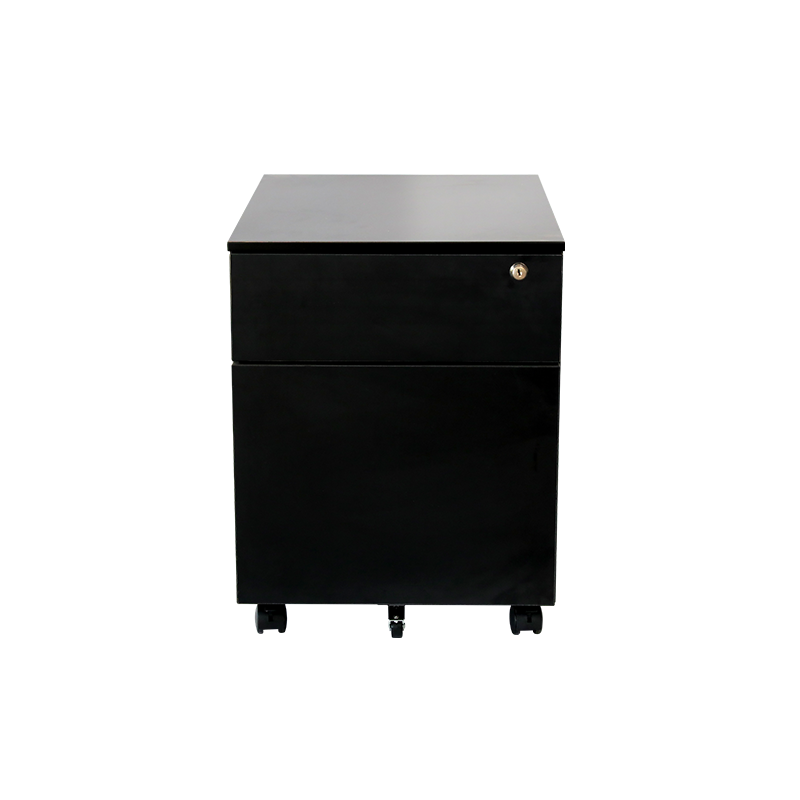
Auxiliary cabinets come in modular formats that adapt to spatial and operational needs. Common configurations include tall narrow units (24" W × 72" H) for aisle-side tool access, low-profile under-bench models (18" H) for fastener storage near CNC machines, and mobile versions on 5" casters with dual-locking brakes for flexible deployment. Drawer interiors often feature foam inserts, dividers, or label holders to enforce 5S methodology. In automotive repair shops, for example, mechanics using labeled metal auxiliary cabinets reported a 22% reduction in tool search time during complex diagnostics, per a 2024 ASE field study.
| Type | Max Shelf Load | Drawer Load (per) | Common Use Case |
|---|---|---|---|
| Heavy-Duty Static | 300 lbs | 200 lbs | Machine shops |
| Mobile Tool Cabinet | 150 lbs | 100 lbs | Field service vans |
| Wall-Mounted Auxiliary | 100 lbs | 75 lbs | Cleanrooms, labs |
Security and Compliance Considerations
In regulated industries, auxiliary cabinets often store controlled items—safety PPE, calibration tools, or hazardous materials. Therefore, features like keyed alike locks, audit-ready labeling surfaces, and OSHA-compliant latching mechanisms are essential. For flammable liquid storage, FM Global-approved models with self-closing doors and double-walled construction are mandatory. Even in non-hazardous settings, secure storage reduces inventory shrinkage; a National Retail Federation survey found manufacturing sites using locked metal auxiliary cabinets saw a 34% drop in small-part theft or misplacement within one year.
Integration with Lean Manufacturing Principles
Metal auxiliary cabinets are foundational to lean workflows. Their standardized dimensions allow seamless integration into cellular manufacturing layouts, while shadow boards or color-coded drawers support visual management. In Toyota’s supplier network, for instance, auxiliary cabinets placed within arm’s reach of every workstation reduced motion waste by an average of 1.8 hours per operator per week. The rigidity of steel construction also ensures consistent positioning—unlike plastic bins that warp or shift—maintaining line discipline during high-volume production runs.
Total Cost of Ownership Advantages
While initial costs range from $400 to $2,500 per unit—higher than plastic alternatives—the lifecycle value is compelling. Steel cabinets rarely require replacement; many last 15–25 years even under daily industrial use. Maintenance is limited to occasional hinge lubrication or lock rekeying. In contrast, polymer cabinets crack under impact or UV exposure, averaging a 5–7 year service life. A facility replacing 20 plastic units every six years spends approximately $24,000 over 18 years, versus $8,000 for a single set of metal cabinets—a 67% cost saving when factoring in labor and downtime.
Selecting the Right Cabinet for Your Application
Begin by evaluating these criteria before purchasing:
- Required internal volume and compartmentalization (e.g., drawers vs. shelves)
- Environmental exposure (moisture, chemicals, temperature extremes)
- Mobility needs (fixed, wall-mounted, or caster-based)
- Regulatory requirements (FM, OSHA, ANSI, or industry-specific codes)
Reputable manufacturers like Lista, Knaack, and Edson offer configurators that match operational parameters to model specifications. Always request third-party test reports for load capacity and finish durability—especially if deploying in safety-critical zones. Investing in the right metal auxiliary cabinet isn’t just about storage; it’s a strategic move toward operational resilience and long-term efficiency.

Contact Us Now
News
LET’S BUILD YOUR CUSTOMIZED PRODUCT

Copyright ©Zhejiang Jiangnan Outdoor Products Co., Ltd.All rights reserved.
