


 English
 中文简体
中文简体1. Material Selection and Weather Resistance in Outdoor Furniture Choosing the right material is the...
READ MOREOffice Furniture: Specification, Trends & Procurement Guide
Author: Admin
Date: Mar 20,2026
Content
- 1 How Office Furniture Shapes Productivity, Health, and Culture
- 2 Core Office Furniture Categories and Their Specifications
- 3 Materials: Performance, Aesthetics, and Sustainability
- 4 Workplace Design Trends Reshaping Office Furniture Specification
- 5 Sustainability Standards and Certifications in Office Furniture
- 6 Procurement Strategy: From Specification to Installation
How Office Furniture Shapes Productivity, Health, and Culture
Office furniture is no longer a background consideration in workplace planning — it is a primary lever for organizational performance, employee wellbeing, and talent retention. Research consistently demonstrates that the physical environment in which people work directly influences cognitive output, collaboration patterns, stress levels, and physical health outcomes. A 2022 study by Leesman, measuring workplace effectiveness across over one million employees globally, found that employees who rate their physical workspace highly are 2.4 times more likely to feel proud to bring visitors to their office and significantly more likely to report high productivity and sense of belonging.
The post-pandemic reconfiguration of office work has elevated these stakes further. With hybrid working now the norm in knowledge-intensive industries, offices must justify the commute — offering experiences, collaborative tools, and physical environments that employees cannot replicate at home. Office furniture sits at the center of this challenge: it must support focused individual work, spontaneous collaboration, formal meeting, informal connection, and mental restoration, often within the same floorplate and sometimes within the same piece of furniture.
The global office furniture market was valued at approximately $68 billion in 2023, with contract furniture (specified by designers and procured by businesses) accounting for the dominant share. The market is forecast to grow at a CAGR of 4.8% through 2030, driven by office construction activity in Asia-Pacific, workplace renovation cycles in North America and Europe, and the growing small-to-medium enterprise segment's increasing investment in professional workspace environments.
Core Office Furniture Categories and Their Specifications
A complete office furniture specification covers multiple interrelated product categories, each with distinct ergonomic, durability, and aesthetic requirements. Understanding the specification priorities for each category prevents common procurement errors — over-investing in visible showpiece items while under-specifying the workhorses that employees interact with for eight hours a day.
Ergonomic Task Chairs
The task chair is the single most consequential piece of office furniture for employee health. Musculoskeletal disorders — back pain, neck strain, and repetitive stress injuries — are the leading cause of workplace-related absence in office environments, and inadequate seating is a primary contributing factor. A specification-grade ergonomic task chair must provide independently adjustable lumbar support, seat depth adjustment (to accommodate users from the 5th to 95th body percentile), armrest height and width adjustment, seat tilt tension control, and a backrest that follows the user's movement rather than fixing them in a single posture.
Key certifications for task chairs include BIFMA Level (sustainability), GREENGUARD Gold (indoor air quality), and EN 1335 (European standard for office seating, covering dimensional requirements and load testing). Contract-grade task chairs are tested to 100,000+ actuation cycles on all moving components, significantly exceeding the durability of retail-grade alternatives — a critical consideration for large deployments where replacement cost and disposal management represent significant total cost of ownership factors.
Height-Adjustable Desks (Sit-Stand Workstations)
Height-adjustable desks have transitioned from a premium workplace benefit to a mainstream specification requirement in many markets. Electric sit-stand desks allow users to alternate between seated and standing postures throughout the day, reducing the metabolic and musculoskeletal risks associated with prolonged sitting. Specification priorities include height range (typically 620–1,270mm to accommodate the full user population range), lifting speed (≥25mm per second for practical usability), load capacity (minimum 80kg for dual-monitor configurations), noise level during adjustment (≤50dB for open-plan environments), and anti-collision detection to prevent injury when descending onto an obstacle.
For large deployments, programmable height memory — allowing each user to store their preferred sitting and standing heights — significantly increases adoption rates compared to manual-only adjustment. Usage data from organizations that have tracked sit-stand desk adoption shows that programmable memory increases daily height transitions by 40–60% compared to equivalent desks without memory functions, validating the health investment of the upgrade.
Storage and Pedestals
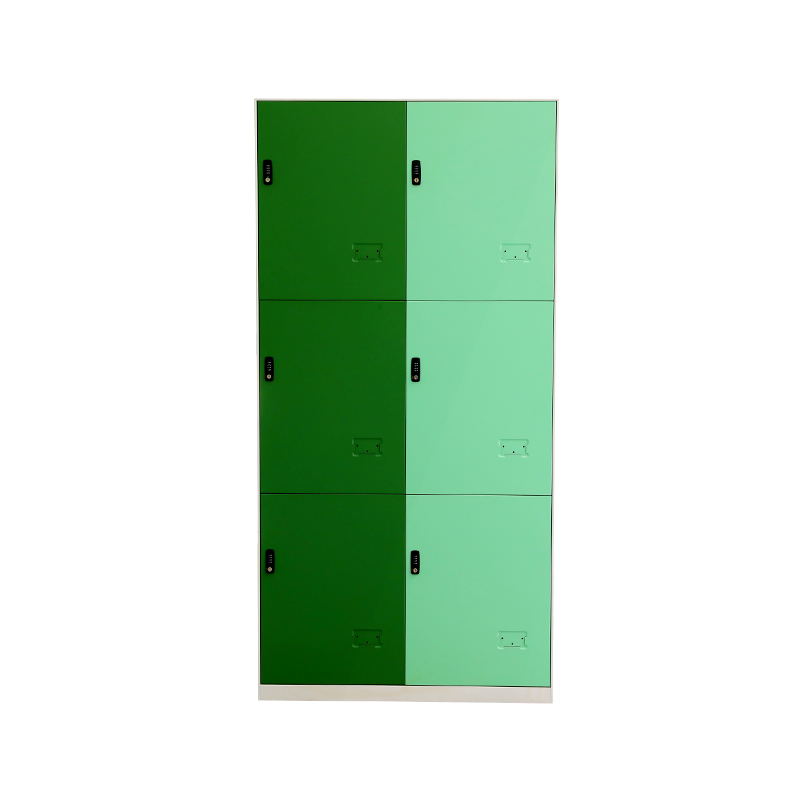
Under-desk pedestals, lateral filing cabinets, and personal lockers form the storage infrastructure of the office environment. For activity-based working environments where employees do not have assigned desks, personal lockers replace dedicated under-desk storage — requiring careful calculation of locker-to-employee ratios (typically 1:1 for hybrid workers with two to three days per week in office) and thoughtful placement relative to primary work zones. Steel storage furniture is specified for its fire resistance, durability, and security (integral locking mechanisms); timber and board storage is preferred in environments where the acoustic and visual warmth of the material is a design priority.
Meeting and Conference Tables
Meeting table specification involves balancing seating capacity, technology integration, and acoustic performance. Recessed power and data modules — providing power outlets, USB-A/C charging, HDMI, and network connectivity at table level without cable clutter — are now a baseline expectation for new contract furniture installations. Table shape affects collaboration quality: rectangular tables of equal participant seniority hierarchy; round or oval configurations promote more equal participation; boat-shaped tables maximize seating while maintaining sightlines to a presentation wall. Surface material choice affects acoustic performance: hard surfaces (glass, polished stone) increase speech intelligibility issues in large conference rooms; felt, leather, or microfiber surfaces reduce reflection and improve the audio quality of hybrid video calls.
Breakout, Lounge, and Soft Seating
The proliferation of collaborative and informal work styles has driven the rapid growth of breakout and lounge furniture within office environments. High-backed lounge chairs and pod seating with acoustic screens create semi-enclosed spaces for focused individual work or confidential one-on-one conversations within open-plan floorplates. Soft seating upholstery in contract environments must meet stringent flammability standards (UK BS 7176 medium hazard, or NFPA 260/261 for US markets) and achieve Martindale abrasion resistance of ≥40,000 rubs for high-traffic applications.
Materials: Performance, Aesthetics, and Sustainability
Material selection across office furniture categories involves balancing durability requirements, aesthetic objectives, environmental credentials, and total cost. The following materials dominate the contract office furniture specification landscape.
| Material | Primary Applications | Key Advantages | Limitations |
|---|---|---|---|
| Powder-Coated Steel | Frames, storage, legs | High durability, recyclable, color-stable | Heavy, conducts cold, limited form complexity |
| MDF / Particleboard with Laminate | Worktops, carcasses, panels | Cost-effective, wide finish range, stable | Heavy, moisture-sensitive at edges, VOC risk |
| Solid Wood / Veneer | Executive desks, meeting tables | Premium aesthetic, warmth, longevity | Higher cost, movement with humidity, requires care |
| Die-Cast Aluminum | Chair bases, table frames | Lightweight, corrosion-resistant, recyclable | Higher unit cost than steel, surface scratches |
| High-Pressure Laminate (HPL) | Worktops, locker fronts | Excellent abrasion/stain resistance, wide design range | Edge treatment required, not repairable if chipped |
Workplace Design Trends Reshaping Office Furniture Specification
The office furniture specification landscape is being reshaped by several converging workplace design trends that are changing both what products are purchased and how they are configured and managed.
Activity-Based Working (ABW)
Activity-based working removes individual desk assignment and instead provides a range of work settings — focus booths, collaborative tables, standing zones, lounge areas, and formal meeting rooms — that employees choose from based on the task they are performing at any given time. ABW environments typically operate at a desk-to-employee ratio of 0.6:1 to 0.8:1, significantly reducing real estate cost while requiring higher investment in furniture variety and quality. The shift to ABW fundamentally changes the furniture specification brief: rather than specifying identical rows of workstations, designers must curate a diverse ecosystem of settings that together satisfy the full spectrum of work modes present in the organization.
Biophilic Design Integration
Biophilic design — incorporating natural materials, organic forms, living plants, and natural light into the built environment — has moved from a niche design philosophy to a mainstream commercial specification trend. Office furniture manufacturers have responded with product lines featuring natural wood veneers, woven natural fiber textiles, organic curved forms, and planter-integrated furniture systems. Research published in the Journal of Environmental Psychology demonstrates that biophilic elements in office environments reduce physiological stress markers and improve restorative recovery between concentrated work periods — providing measurable business justification for the premium these products command.
Acoustic Zoning Through Furniture
Open-plan offices suffer from a predictable and well-documented problem: speech intelligibility — the ability to understand conversations happening nearby — is the primary driver of cognitive distraction and productivity loss in open environments. Acoustic furniture — high-backed seating with sound-absorbing upholstery, freestanding acoustic screens with fabric panels, semi-enclosed work pods, and phone booths — creates acoustic differentiation within open floorplates without the cost and inflexibility of building full-height partitions. The acoustic performance of furniture products is measured by Sound Absorption Coefficient (αw) per ISO 11654, enabling designers to specify products that will deliver quantifiable acoustic improvement to specific zones.
Technology Integration
The convergence of office furniture and workplace technology is accelerating. Desks are specified with integrated wireless charging surfaces; meeting tables include built-in video conferencing hardware and cable management systems designed for specific AV platforms; lockers incorporate digital access control with smartphone unlock and usage monitoring. Furniture manufacturers are partnering with technology companies to develop integrated product ecosystems that address the hybrid workplace's central challenge: ensuring that technology works seamlessly regardless of which desk, room, or building an employee chooses to work from on any given day.
Sustainability Standards and Certifications in Office Furniture
Sustainability has become a primary procurement criterion for corporate office furniture buyers responding to ESG commitments, green building certification requirements, and employee expectations. Understanding the certification landscape is essential for making credible sustainability claims and for verifying supplier assertions.
- BIFMA level® Certification: The furniture industry's primary multi-attribute sustainability standard, covering materials, energy and atmosphere, human and ecosystem health, and social responsibility. Level 1, 2, and 3 certifications provide a tiered framework for progressive sustainability improvement, and are recognized by LEED v4 and WELL Building Standard as qualified products for credit contribution.
- GREENGUARD Gold: Certifies that furniture products meet stringent chemical emission limits for volatile organic compounds (VOCs), formaldehyde, and other indoor air quality-affecting substances. Particularly relevant for LEED EQ credit compliance and for procurement into healthcare, education, and childcare environments.
- FSC / PEFC Chain of Custody: For wood-based furniture components, these certifications verify that timber originates from responsibly managed forests and is traceable through the supply chain. Required for LEED Materials and Resources credits and increasingly specified by corporate buyers with deforestation commitments.
- Cradle to Cradle (C2C): A product design and certification framework assessing material health, material reutilization, renewable energy use, water stewardship, and social fairness. C2C Certified™ products at Silver level and above are recognized as exemplifying circular economy principles — a growing procurement priority for organizations with net-zero and circular economy commitments.
- ISO 14001 and EPDs: ISO 14001-certified manufacturing demonstrates systematic environmental management at the supplier level. Environmental Product Declarations (EPDs) per ISO 14025 provide transparent, third-party-verified lifecycle assessment data enabling buyers to compare the embodied carbon of competing furniture products on a consistent, standardized basis.
Procurement Strategy: From Specification to Installation
Office furniture procurement for significant projects involves a structured process that, when managed well, delivers better outcomes in terms of product quality, project schedule, and total cost than ad-hoc purchasing approaches. The following framework reflects best practice in contract furniture procurement for projects involving 50 or more workstations.
The process begins with a needs assessment that maps the organization's work patterns, headcount projections, storage requirements, and technology infrastructure to a preliminary space plan. This data informs a furniture brief — a document specifying performance requirements, aesthetic direction, budget parameters, sustainability criteria, and lead time constraints — that is used to solicit competitive proposals from furniture dealers or manufacturers.
Mock-up and trials are an underused but highly effective procurement tool. Arranging for shortlisted task chairs and desks to be trialed by a representative sample of end users — including users at the extremes of the size and weight distribution — generates qualitative feedback that specification sheets cannot provide and frequently identifies comfort or usability issues before they become post-installation complaints affecting hundreds of people.
Lead time management is critical for large office furniture projects. Contract-grade products with custom finishes or configurations typically carry 8–16 week lead times from order to delivery. Phased delivery scheduling — coordinated with the construction program to ensure furniture arrives at the right time for installation without extended on-site storage — requires close coordination between the furniture dealer, contractor, and project manager. Installation planning, including lift access, floor protection, and assembly sequencing for complex systems furniture, should be confirmed before contract signature rather than treated as an aftermarket logistics problem.

Contact Us Now
News
LET’S BUILD YOUR CUSTOMIZED PRODUCT

Copyright ©Zhejiang Jiangnan Outdoor Products Co., Ltd.All rights reserved.
