


 English
 中文简体
中文简体1. Material Selection and Weather Resistance in Outdoor Furniture Choosing the right material is the...
READ MORESteel Office Furniture: Durability, Specs & Buying Guide
Author: Admin
Date: Mar 12,2026
Steel office furniture outperforms wood and engineered-wood alternatives on durability, security, load capacity, and long-term cost — and it does so across a wider range of environments than most buyers expect. For any office that prioritizes longevity, file security, heavy daily use, or a budget that needs to stretch across many years without replacement cycles, steel is the most practical material choice. The trade-off is weight and a more industrial aesthetic, but modern powder-coat finishes and profile designs have largely closed the visual gap with laminate and wood furniture.
This guide covers the full picture: what steel office furniture is built from, which product categories make the most sense in steel, what specifications separate quality pieces from budget units, and what to evaluate before purchasing for a commercial office environment.
Content
- 1 Why Steel Outperforms Wood in High-Use Office Environments
- 2 Main Categories of Steel Office Furniture
- 3 Steel Gauge and Construction Quality: What the Numbers Mean
- 4 Powder Coat Finishes: Durability, Color, and Maintenance
- 5 Comparing Steel to Wood and Laminate Office Furniture
- 6 What to Check Before Buying Steel Office Furniture
- 7 Steel Office Furniture for Specific Environments
- 8 Total Cost of Ownership: Steel vs. Alternatives Over Time
Why Steel Outperforms Wood in High-Use Office Environments
The case for steel over wood in commercial office furniture is not about aesthetics — it is about performance over time under real conditions. Three specific advantages stand out in practice:
Structural Load Capacity
A standard 4-drawer steel lateral filing cabinet holds 150–200 lbs per drawer, with the full unit rated to 800 lbs or more. Equivalent wood or particleboard units typically rate at 50–80 lbs per drawer before structural deflection becomes a problem. In an active office where filing cabinets are loaded to capacity with binders, hanging files, or legal documents, the wood unit will sag, warp drawers, or fail drawer slides within 3–5 years. A properly built steel cabinet maintains drawer alignment and load performance for 15–20 years under identical conditions.
Resistance to Environmental Stress
Wood and MDF furniture swells, warps, and delaminates with humidity cycling — a particular problem in offices with seasonal HVAC differences, warehouse-adjacent spaces, or basement storage. Steel is dimensionally stable across humidity ranges from 10% to 90% RH without structural change. In environments with potential water exposure — server rooms, first-floor offices in flood-prone areas, or industrial offices — steel's resistance to moisture is not just a preference but a functional requirement.
Security and Tamper Resistance
Steel filing cabinets and storage units provide substantially higher physical security than wood equivalents. A steel cabinet with a three-point locking mechanism resists prying force that would defeat a wood cabinet in seconds. For offices storing personnel files, financial documents, legal records, or controlled materials, a steel cabinet with a quality cylinder lock (UL-listed or equivalent) is the minimum credible security standard — wood or plastic cabinets with cam locks offer essentially no meaningful resistance to a determined attempt.
Main Categories of Steel Office Furniture
Steel is applied differently across office furniture categories, and the value proposition varies significantly by product type. Understanding which categories benefit most from steel construction helps focus purchasing decisions.
Steel Filing Cabinets
This is where steel has the clearest advantage over all alternatives. Filing cabinets come in two primary configurations:
- Vertical filing cabinets: 2–5 drawers, letter or legal width (15" or 18.25"), depth 26–29". Space-efficient front-to-back. Best for individual use or tight spaces.
- Lateral filing cabinets: 2–5 drawers, widths from 30" to 42". Side-to-side filing. Better access in shared environments; can also be used as a credenza surface when topped with a work surface.
Key quality indicators for steel filing cabinets: full-extension drawer slides (drawers open 100% to access the rear), anti-tilt interlock (prevents more than one drawer opening simultaneously to avoid tip-over), and drawer weight ratings clearly stated. Commercial-grade units from HON, Hirsh, or Lorell typically carry lifetime warranties on the cabinet body — a direct reflection of the material's durability.
Steel Desks and Workstations
Steel-framed desks with steel pedestals offer significantly higher durability than wood-case desks at similar price points in the commercial segment. The desk surface itself is typically laminate over a steel substrate or a separate wood-composite top — a steel work surface is used in industrial and laboratory environments but is uncommon in typical offices due to glare and hardness.
Steel-framed height-adjustable (sit-stand) desk frames are the dominant construction method for commercial standing desks. A steel frame rated to 275–350 lbs with dual-motor actuation and a 3-stage leg column provides the stability and lifting capacity required for multi-monitor workstations. Single-motor frames rated below 200 lbs are adequate only for lightweight setups.
Steel Storage Cabinets and Lockers
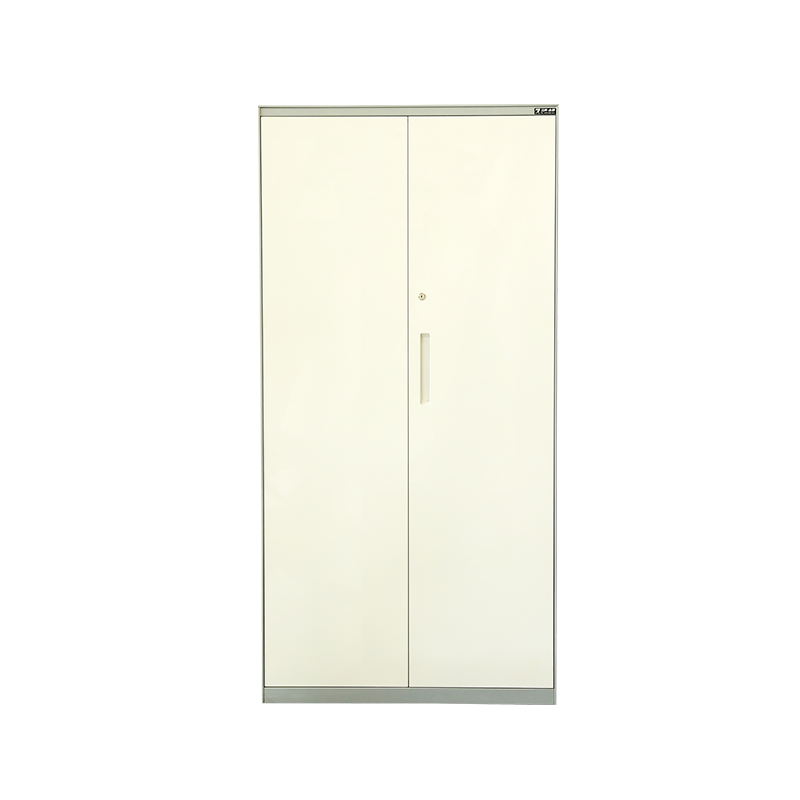
Fully-welded steel storage cabinets (also called "wardrobe cabinets" or "storage units") are standard in government offices, schools, healthcare facilities, and any environment requiring controlled storage. They accommodate binders, equipment, supplies, and personal items with adjustable shelving typically rated to 50–100 lbs per shelf.
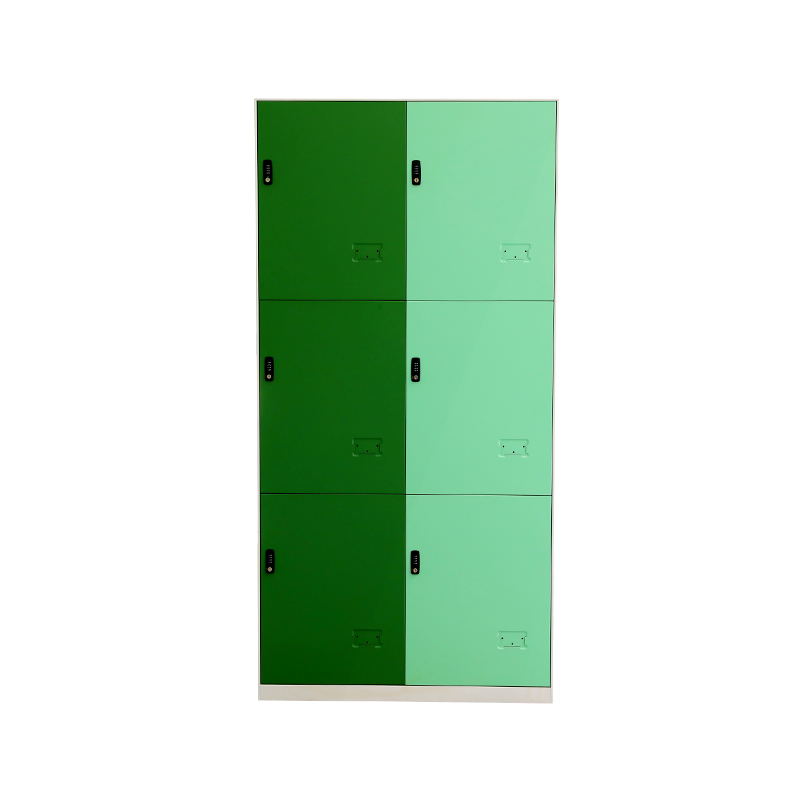
Steel lockers — single-tier, double-tier, or multi-tier configurations — are standard for employee storage in offices with hot-desking or flexible workstation arrangements, as well as in healthcare and education environments. Gauge thickness and door construction determine security level and longevity.
Steel Shelving and Bookcases
Open steel shelving systems are standard in offices managing high document volumes, supplies storage, or archival materials. Industrial steel shelving rated to 350–1,000 lbs per shelf (when properly anchored) far exceeds what any wood bookcase can safely support. Freestanding steel bookcases for office environments typically rate at 50–100 lbs per shelf with a more refined aesthetic profile than industrial shelving.
Steel Gauge and Construction Quality: What the Numbers Mean
Steel furniture is manufactured from cold-rolled steel sheet. The thickness of the steel — its gauge — is the primary determinant of structural rigidity, dent resistance, and load capacity. Counterintuitively, lower gauge numbers indicate thicker, heavier steel.
| Gauge | Thickness (inches) | Thickness (mm) | Typical Application |
|---|---|---|---|
| 14-gauge | 0.075" | 1.9 mm | Heavy-duty industrial cabinets, lockers, security storage |
| 16-gauge | 0.060" | 1.5 mm | Commercial-grade filing cabinets, storage cabinets |
| 18-gauge | 0.048" | 1.2 mm | Standard office filing cabinets, mid-range storage units |
| 20-gauge | 0.036" | 0.9 mm | Light-duty cabinets, desk pedestals, decorative panels |
| 22-gauge | 0.030" | 0.76 mm | Budget storage, light panels, shelving backs |
For most commercial office filing cabinet applications, 18-gauge steel is the minimum acceptable specification. Budget products using 20- or 22-gauge steel will dent easily, develop drawer alignment problems under load, and fail anti-tilt mechanisms earlier. Specifying 16-gauge for heavy-use shared environments adds cost but significantly extends service life — the difference in unit cost is typically $50–$150, far less than the cost of replacement within 5 years.
Construction method also matters. Fully-welded cabinets are stronger than those assembled with mechanical fasteners (rivets or screws). Look for welded corners on the cabinet body and reinforced drawer box construction. Budget units often save cost by using thinner gauge on interior components like drawer boxes and drawer slides while advertising the cabinet body gauge — always ask for the drawer box gauge separately if structural integrity is a priority.
Powder Coat Finishes: Durability, Color, and Maintenance
Virtually all commercial steel office furniture is finished with powder coat rather than liquid paint. Powder coat is an electrostatically applied dry polymer coating cured in an oven, producing a finish that is significantly harder, thicker, and more chemically resistant than liquid paint.
The advantages over liquid paint are concrete:
- Thickness: Powder coat is applied at 60–120 microns; liquid paint at 20–40 microns. The thicker coat provides better impact and abrasion resistance.
- Hardness: Cured powder coat achieves pencil hardness of H to 2H — it resists scratching from keys, pens, and normal office contact that would mark liquid paint.
- Chemical resistance: Powder coat resists cleaning solvents, mild acids, and disinfectants used in office and healthcare environments. Liquid paint will blister or peel under repeated disinfectant cleaning.
- Corrosion performance: Quality powder coat over properly pretreated steel (phosphated or zinc-primed) passes 500+ hours of salt spray testing (ASTM B117) without rust creep at scribe lines — adequate for most office environments including those with moderate humidity.
Color range in steel office furniture has expanded significantly. Beyond the traditional gray and putty tones, contemporary steel furniture is now available in full color ranges including white, black, charcoal, and custom RAL colors for branded office environments. Textured matte finishes have largely replaced the older glossy enamel look in commercial product lines, reducing fingerprint visibility and eye fatigue in bright office settings.
Maintenance is straightforward: mild soap and water or a non-abrasive all-purpose cleaner removes the vast majority of office soiling from powder-coated steel. Avoid abrasive scrubbers that can break through the coating and expose bare steel to corrosion. Touch-up paint in matching colors is available from most major manufacturers for repairing chips or scratches in high-traffic areas.
Comparing Steel to Wood and Laminate Office Furniture
Steel is not the right material for every piece of office furniture. Understanding where each material category performs best prevents over-specifying (and overspending) on steel where it adds no value, and under-specifying it where it matters most.
| Criteria | Steel | Solid Wood | Laminate/MDF |
|---|---|---|---|
| Load Capacity | Excellent | Good–Excellent | Poor–Moderate |
| Humidity Resistance | Excellent | Moderate (seasonal movement) | Poor (swelling, delamination) |
| Physical Security | Excellent | Moderate | Poor |
| Aesthetic Range | Moderate (industrial–modern) | Excellent (traditional–executive) | Good (wide range of prints) |
| Weight | Heavy | Heavy | Moderate |
| Repairability | Touch-up paint; components replaceable | Refinishable; high repair value | Difficult; chips and swelling not repairable |
| Service Life (commercial) | 15–25 years | 20–40 years (quality pieces) | 5–10 years |
| Cost per Year of Service | Low | Low–Medium | High |
The data points to a practical rule: use steel for storage, filing, and high-use utility pieces; use solid wood or quality laminate for executive desk surfaces and reception environments where aesthetics are primary. In most commercial offices, a mixed specification — steel filing cabinets, steel storage, steel-framed seating, laminate desk surfaces — delivers the best combination of performance and visual appeal across the whole environment.
What to Check Before Buying Steel Office Furniture
A few specific checks before committing to a purchase prevent the most common regrets with steel office furniture:
Load Ratings and Testing Standards
Look for furniture tested to ANSI/BIFMA standards (the American standard for commercial office furniture) or equivalent EN standards for European markets. BIFMA X5.9 covers storage furniture; BIFMA X5.5 covers desks. Products tested to these standards have been subjected to load cycling, stability, and durability tests that validate their rated capacity under realistic use conditions — not just static load at point of sale. Products that do not cite a testing standard have no validated performance baseline.
Drawer Slide Quality
The drawer slide is the highest-wear component in any filing cabinet. Quality commercial slides from Hettich, Accuride, or equivalent manufacturers are rated to 75,000–100,000 open/close cycles. Budget slides from unspecified manufacturers may fail at 10,000–20,000 cycles — in a shared office environment, that difference can represent 10 years of service versus 1–2 years. Ask for the slide manufacturer and cycle rating before purchasing high-use shared filing cabinets.
Anti-Tilt Interlock Mechanism
A filing cabinet with multiple drawers open simultaneously can tip forward. Anti-tilt interlock mechanisms — standard on commercial-grade cabinets — physically prevent a second drawer from opening while another is already open. This is a safety requirement under ANSI/BIFMA standards, not a luxury feature. Verify this mechanism is present and functional on any multi-drawer steel cabinet, particularly for tall 4- and 5-drawer vertical units.
Floor Load Capacity
A fully loaded 4-drawer lateral steel filing cabinet can weigh 300–450 lbs. In an office building with standard commercial floor loading of 50 lbs/sq ft, a single cabinet is within limit — but a row of 10 filing cabinets loaded to capacity in a small room can approach or exceed the floor's design load. For large-scale filing installations, consult a structural engineer before installation, particularly on upper floors of older buildings or in spaces with concentrated loading.
Warranty Terms
Warranty coverage is a reliable proxy for manufacturer confidence in their own product. Commercial-grade steel office furniture from established manufacturers typically carries lifetime structural warranties on the cabinet body and 5–10 year warranties on mechanical components. A 1–3 year warranty on a steel filing cabinet is a signal that the product is not built to commercial durability standards, regardless of what the specifications sheet states.
Steel Office Furniture for Specific Environments
Different work environments place different demands on office furniture. Steel's properties make it particularly well-suited to several specific contexts:
Healthcare and Clinical Offices
Healthcare environments require furniture that tolerates repeated disinfection with hospital-grade cleaners including quaternary ammonium compounds and bleach solutions. Powder-coated steel handles these chemicals where laminate edges and wood grain surfaces cannot. Seamless welded construction with no exposed raw edges or cavities also reduces bacterial harboring points — a specific design requirement for clinical environments. Several manufacturers offer healthcare-specific steel furniture lines with antimicrobial powder coat additives for high-touch surfaces.
Government and Institutional Offices
Government procurement specifications frequently mandate steel construction for file storage and security furniture because of the combination of document security requirements and the need for extremely long service life under high-turnover staffing conditions. GSA-approved steel furniture meets Federal Property Management Regulations for government office use — a certification that also validates durability and construction quality for non-government buyers who want a reliable independent standard.
Industrial and Warehouse Offices
Offices adjacent to manufacturing floors, warehouses, or distribution centers face dust, temperature swings, vibration, and occasional physical impact that rapidly degrade wood and laminate furniture. Heavy-gauge steel furniture in these environments outlasts wood alternatives by a wide margin. Consider adding leveling glides rather than fixed feet to accommodate uneven concrete floors, and specify epoxy primer under powder coat in environments with chemical exposure from nearby processes.
Open-Plan and Hot-Desking Offices
In open-plan environments with mobile storage pedestals and personal lockers replacing fixed desk storage, steel is the dominant material. Mobile steel pedestals on locking casters take the physical abuse of daily repositioning — being kicked, dragged, and rolled across hard flooring — that would quickly chip and crack a laminate equivalent. Personal lockers in hot-desking environments see intensive use from multiple users daily and require the durability that only commercial-gauge steel provides.
Total Cost of Ownership: Steel vs. Alternatives Over Time
The purchase price comparison between steel and laminate furniture consistently favors laminate at the point of sale. The long-term cost picture is different. Consider a representative scenario for a 20-workstation office:
- Laminate filing cabinets: $180/unit × 20 = $3,600 initial cost. Average service life in a shared office: 6–8 years. 15-year cost with one replacement: $7,200.
- Commercial steel filing cabinets: $320/unit × 20 = $6,400 initial cost. Average service life: 18–22 years. 15-year cost with no replacement: $6,400.
Over a 15-year period, commercial steel filing cabinets cost less in total than laminate alternatives, despite a 78% higher purchase price per unit. This calculation does not include the staff time and disruption cost of replacement purchasing, delivery coordination, old furniture disposal, and data migration during a filing cabinet replacement cycle — all of which add to the real cost of the lower-priced initial option.
The total cost of ownership calculation applies most strongly to high-use shared items — filing cabinets, storage units, lockers — that see daily use from multiple people. For low-use single-person storage or items likely to be replaced for aesthetic reasons before they wear out functionally, the calculation shifts toward lower initial cost alternatives.

Contact Us Now
News
LET’S BUILD YOUR CUSTOMIZED PRODUCT

Copyright ©Zhejiang Jiangnan Outdoor Products Co., Ltd.All rights reserved.
