


 English
 中文简体
中文简体1. Material Selection and Weather Resistance in Outdoor Furniture Choosing the right material is the...
READ MOREStarry Sky House: Types, Locations, and How to Build One
Author: Admin
Date: Mar 06,2026
Content
- 1 What a Starry Sky House Really Is — and Why People Want One
- 2 Types of Starry Sky Houses: From Glamping to Permanent Builds
- 3 What Makes a Starry Sky House Actually Good for Stargazing
- 4 Best Locations Worldwide for Starry Sky House Experiences
- 5 Building Your Own Starry Sky House: Key Decisions and Costs
- 6 Starry Sky House as a Glamping Business: Is It Viable?
- 7 Practical Tips for Getting the Most from a Starry Sky House Stay
- 8 The Difference Between a True Starry Sky House and a Marketing Label
What a Starry Sky House Really Is — and Why People Want One
A starry sky house is a dwelling — permanent or temporary — specifically designed to give occupants an unobstructed, immersive view of the night sky, typically through glass ceilings, transparent roof panels, skylights, or open-air structures. The defining feature is the ability to lie in bed or relax indoors while watching stars overhead, without stepping outside. This concept has moved from niche luxury into a mainstream hospitality and residential trend, appearing everywhere from Scandinavian wilderness retreats to glamping sites in the American Southwest.
The appeal is practical as much as romantic: light pollution now affects over 99% of the U.S. and European population, meaning most adults have never experienced a truly dark sky. A starry sky house — whether it's a transparent cabin, a glass igloo, a geodesic dome, or a skylight-fitted bedroom — offers direct access to that experience in comfort. This article covers the main types, what to expect, how to find or build one, and what separates a genuinely good stargazing structure from a gimmick.
Types of Starry Sky Houses: From Glamping to Permanent Builds
The term covers a wide range of structures. Understanding the differences helps set the right expectations, whether you're planning a stay or considering a build.
Glass Cabins and Aurora Cabins
Popularized in Finnish Lapland by resorts like Kakslauttanen Arctic Resort, glass cabins have a fully transparent or semi-transparent roof — often using thermally insulated tempered glass — while the walls remain opaque for privacy. The Kakslauttanen cabins, which began as a single igloo in 1973 and grew into a resort by the 1990s, are now among the most photographed stargazing accommodations in the world. Their heated glass roofs prevent condensation and frost from obscuring the view even in sub-zero conditions. Occupancy at top glass cabin resorts often books out 12–18 months in advance, reflecting the level of demand.
Geodesic Domes
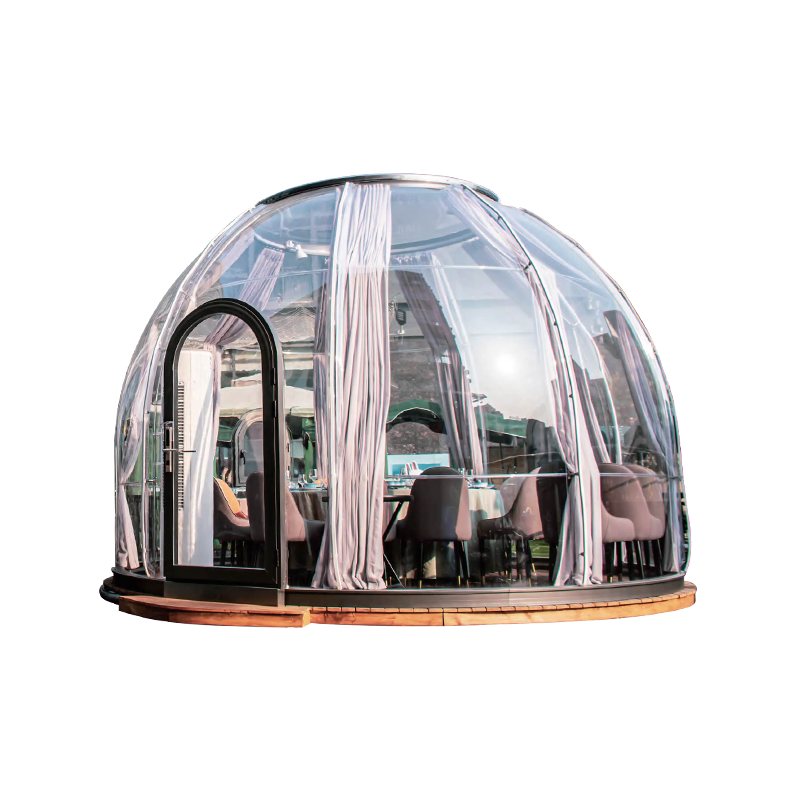
Geodesic domes use a triangulated polycarbonate or ETFE (ethylene tetrafluoroethylene) panel structure. They are popular for glamping sites because they are relatively quick to erect, weather-resistant, and available as prefabricated kits. Panels can be fully transparent, partially transparent, or a mix. A standard glamping dome of 5–7 meters in diameter provides 20–38 square meters of usable floor space — enough for a bedroom, small sitting area, and bathroom pod. Brands like Pacific Domes and Glamping Dome Store supply kits that range from $8,000 to $30,000 depending on size and insulation specification.
Bubble Hotels and Transparent Tents
Bubble hotels use inflated transparent PVC or TPU spheres, kept rigid by a continuous low-pressure air pump. BubbleTree (France) pioneered the concept in the early 2000s, and the format has spread to vineyards, safari parks, and mountain resorts worldwide. The main trade-off is privacy — some operators use frosted lower panels or position bubbles with enough separation to address this. Bubble structures are best suited for mild-season stargazing; they offer less thermal performance in extreme cold than glass or polycarbonate structures.
Skylight Bedrooms and Roof Window Builds
At the residential end of the spectrum, a starry sky bedroom is simply a standard room retrofitted or designed with a large overhead glazed panel above the bed. Products like VELUX's modular skylight systems or custom structural glazing allow homeowners to create a permanent stargazing bedroom without building an entirely new structure. A high-quality fixed skylight installation above a bedroom typically costs between $1,500 and $6,000 including labor, making this the most accessible entry point for homeowners.
Retractable Roof Structures
The most versatile option, retractable roof systems allow a room to shift between enclosed and open-air modes. These are common in high-end residential builds and boutique hotels. Motorized glass or polycarbonate panels slide or fold back on tracks, opening the ceiling fully to the sky. Systems by companies like Weinor, Broadview, and local architectural glaziers start around $15,000–$40,000 for a bedroom-sized installation, but deliver year-round utility since the roof closes in bad weather.
What Makes a Starry Sky House Actually Good for Stargazing
Not every glass-roofed cabin delivers a meaningful stargazing experience. Several factors determine whether the night sky view is genuinely spectacular or disappointing.
Light Pollution Levels at the Location
This is the single most important variable. Even the most beautifully designed glass cabin in a suburb offers a poor sky view. The Bortle scale measures sky darkness from Class 1 (exceptional dark sky, Milky Way casts visible shadows) to Class 9 (inner-city sky). A meaningful stargazing experience requires a Bortle Class 3 or darker location — found in remote rural areas, designated Dark Sky Parks, and high-altitude sites away from urban centers. Tools like Light Pollution Map (lightpollutionmap.info) allow you to check the Bortle class of any location before booking or building.
Glass Specification and Optical Clarity
Standard double-glazed glass reduces light transmission to around 70–80%. Low-iron glass (sometimes called "ultra-clear" or "starphire" glass) achieves 90–92% light transmission and eliminates the green tint visible in standard glass, producing a noticeably crisper view of faint stars. Anti-reflective coatings further improve clarity. For stargazing structures, specifying low-iron glass with AR coating is worth the 15–25% price premium over standard glazing.
Condensation and Frost Management
Condensation on the inner or outer glass surface can entirely obscure the view on cold, humid nights. Quality stargazing structures use one or more of the following: heated glass (resistive elements embedded in the glass pane), triple-glazed units with warm-edge spacers, or ventilated double-skin polycarbonate panels that prevent moisture buildup. The glass igloos at Kakslauttanen, for example, use a proprietary heated glass system specifically developed to stay clear at temperatures below −30°C.
Interior Lighting Control
Interior lights reflect off the glass ceiling and wash out the star view. Good starry sky houses install all lighting below the sightline (floor-level or recessed wall lighting), use red-spectrum lighting (which doesn't kill night vision), and provide blackout options for the walls so guests can darken the interior completely while lying in bed.
Roof Angle and Sightline
A flat ceiling panel directly above the bed maximizes the sky view from the lying position. Steeply pitched roofs create a narrower sightline. The ideal configuration is a glazed panel covering at least 60–70% of the ceiling area above the sleeping zone, angled between 0° and 30° from horizontal, so that a person lying flat can see from horizon to zenith across a wide arc.
Best Locations Worldwide for Starry Sky House Experiences
The combination of dark skies, available stargazing accommodation, and reliable clear nights varies enormously by region. The following locations consistently rank among the best globally:
| Location | Bortle Class | Best Season | Common Structure Type |
|---|---|---|---|
| Finnish Lapland, Finland | Class 1–2 | Oct – Mar (Aurora season) | Heated glass cabins |
| Atacama Desert, Chile | Class 1 | Year-round (300+ clear nights/yr) | Observatory lodges, glass cabins |
| Sedona & Grand Canyon, USA | Class 2–3 | Spring and Autumn | Geodesic domes, skylight cabins |
| Alentejo Region, Portugal | Class 2–3 | Apr – Oct | Bubble hotels, dome tents |
| Wadi Rum, Jordan | Class 1–2 | Mar – May, Sep – Nov | Transparent desert tents, bubbles |
| South Island, New Zealand | Class 1–2 | Jun – Aug (Southern Milky Way) | Glass cabins, retractable roofs |
The Atacama Desert in Chile is frequently cited by astronomers as the finest stargazing location on Earth, combining extreme altitude (~2,400m at San Pedro de Atacama), minimal humidity, and negligible light pollution. The Elqui Domos resort there offers dome-shaped rooms with retractable roof panels directly above the beds, allowing guests to sleep under a fully open sky in mild conditions.
Building Your Own Starry Sky House: Key Decisions and Costs
For those considering building rather than visiting, a starry sky structure can range from a DIY skylight retrofit to a bespoke architect-designed glass pavilion. The choices cascade from location to structure type to glazing specification.
Choosing the Right Structure for Your Land
If you have rural land with dark skies, a prefabricated geodesic dome or glamping pod is the fastest path to a functional starry sky structure. Full kit domes in the 6-meter range, including polycarbonate panels, insulated flooring platform, and basic electrical package, are available from European and North American suppliers for $12,000–$25,000 before site preparation. Adding a bathroom pod, heating, and interior fit-out brings the total closer to $35,000–$60,000 — still a fraction of a custom glass cabin build.
Glazing Options and Their Trade-offs
- Tempered safety glass: Best optical clarity, heavy, requires robust structural support. Best for permanent builds. Cost: $150–$400/m².
- Polycarbonate panels: Lightweight, impact-resistant, easier to install. Slight optical distortion vs. glass; can yellow over 10–15 years. Cost: $40–$120/m².
- ETFE film cushions: Extremely lightweight, excellent UV transmission, self-cleaning surface. Requires specialist installation. Used in stadium roofs and premium glamping. Cost: $100–$200/m² installed.
- Inflatable PVC (bubble structures): Low cost per square meter, fast setup, requires continuous power for the air pump. Not suitable for extreme temperatures. Cost: $8,000–$20,000 per complete bubble unit.
Thermal and Condensation Engineering
A glass or polycarbonate roof creates significant thermal challenges. In summer, solar gain can make interiors unbearably hot without shading or ventilation. In winter, heat loss through the glazed surface is substantial — a single-glazed glass roof loses heat at roughly 5.8 W/m²K, compared to 0.15–0.30 W/m²K for a well-insulated solid roof. Mitigations include: electrochromic smart glass (tints on demand), internal roller blinds on a ceiling track, triple-glazed units for cold climates, and radiant floor heating to offset cold radiation from the glass at night.
Planning Permission and Building Regulations
Regulations vary significantly by country and local authority. In many rural areas, glamping structures under a certain footprint are classified as temporary and may not require full planning permission. In the UK, for example, a geodesic dome used for short-stay accommodation on a farm may qualify as permitted development if under 25 square meters and not in an Area of Outstanding Natural Beauty. Always verify with local planning authorities before purchasing a kit or beginning any groundwork.
Starry Sky House as a Glamping Business: Is It Viable?
The glamping sector has grown rapidly, with the global glamping market valued at $3.8 billion in 2023 and forecast to reach $13.4 billion by 2032 (CAGR of 14.8%). Stargazing-focused accommodation commands among the highest nightly rates in the glamping category — typically $250–$600 per night for well-positioned glass cabins or domes in dark sky locations, compared to $80–$150 for standard glamping canvas units.
Revenue and Payback Estimates
A single well-built geodesic dome at a dark sky location, marketed through platforms like Glamping Hub, Airbnb, or Under Canvas, can achieve 60–75% occupancy during peak stargazing seasons. At $350/night average rate and 200 occupied nights per year, gross revenue is approximately $70,000 per unit. After platform fees, operating costs, and maintenance, net margins of 40–55% are achievable, suggesting payback on a $50,000 build in 2–3 years. Adding a second or third unit scales revenue with marginal additional operating cost.
What Guests Prioritize in Reviews
Analysis of guest reviews across stargazing accommodation platforms consistently highlights the same factors:
- Sky quality — guests who can see the Milky Way give significantly higher ratings regardless of other amenities.
- Bed comfort and positioning — the bed must be directly under the glazed area; a side placement defeats the purpose.
- Privacy — isolated units with no direct sightlines to neighbors rate significantly higher than clustered layouts.
- Heating quality — a cold night under a beautiful sky is memorable; a cold night in a poorly heated dome is simply uncomfortable.
- Minimal exterior lighting — properties that keep site lighting red-spectrum or motion-activated maintain the dark sky experience guests came for.
Practical Tips for Getting the Most from a Starry Sky House Stay
Even a perfectly designed structure in a dark sky location can disappoint if the timing or preparation is off. These practical steps make the difference between a mediocre and an unforgettable stargazing night.
- Book around the new moon: The full moon outshines faint stars and the Milky Way entirely. The best stargazing occurs in the 5–7 nights before and after the new moon, when the moon rises late or not at all during evening hours. Moon phase calendars are freely available online.
- Check the cloud forecast: Use Clear Outside (cleardarksky.com) or Meteoblue's astronomy forecast rather than standard weather apps. These show cloud cover by altitude layer and give a far more accurate picture of overnight sky conditions.
- Allow 20–30 minutes for dark adaptation: The human eye takes this long to reach full night vision. Avoid phone screens and white light in the 30 minutes before your main viewing period.
- Download a star map app: SkySafari, Stellarium, or Sky Map (free) allow you to identify constellations, planets, and satellites in real time by pointing your phone at the sky.
- Plan for the best viewing window: The Milky Way core is visible from the northern hemisphere roughly from April to October, with peak visibility in July and August when the galactic center is highest in the sky after midnight.
- Layer up even in summer: Temperatures drop significantly under a clear sky at altitude or in desert environments. Having a light duvet and extra blanket ensures you stay comfortable enough to actually enjoy watching the sky for hours rather than retreating inside.
The Difference Between a True Starry Sky House and a Marketing Label
As the concept has grown in popularity, the term "starry sky" has been applied liberally to properties that fall well short of the real experience. Knowing the red flags helps avoid a disappointing booking.
- Small skylights positioned over a sofa or bath, not the bed — a genuinely immersive starry sky room places the glazing overhead where you sleep.
- Location near towns or highways — check the listing's coordinates against a light pollution map before booking. Beautiful photography can mask a Class 6–7 sky.
- No mention of condensation management — if a glass cabin listing doesn't reference heated glass or anti-condensation systems, expect your view to fog over on cold nights.
- Dense groupings of units with shared lighting — cluster resorts with multiple cabins and resort-style pathway lighting undermine the dark sky experience they claim to offer.
- Photos taken with long-exposure cameras — night sky photographs are almost always taken with cameras set to 15–30 second exposures and high ISO settings. The human eye sees significantly fewer stars. If a listing's sky photos look like a NASA image, calibrate your expectations accordingly.
The most reliable filter is guest reviews that specifically mention the sky quality on clear nights — not just the overall experience. A reviewer who writes "we could see the Milky Way from the bed" tells you far more about what to expect than any property description.

Contact Us Now
News
LET’S BUILD YOUR CUSTOMIZED PRODUCT

Copyright ©Zhejiang Jiangnan Outdoor Products Co., Ltd.All rights reserved.
