


 English
 中文简体
中文简体1. Material Selection and Weather Resistance in Outdoor Furniture Choosing the right material is the...
READ MOREStarry Sky House: Design, Tech & Stargazing Guide
Author: Admin
Date: Aug 06,2026
Content
Defining the Modern Starry Sky House Experience
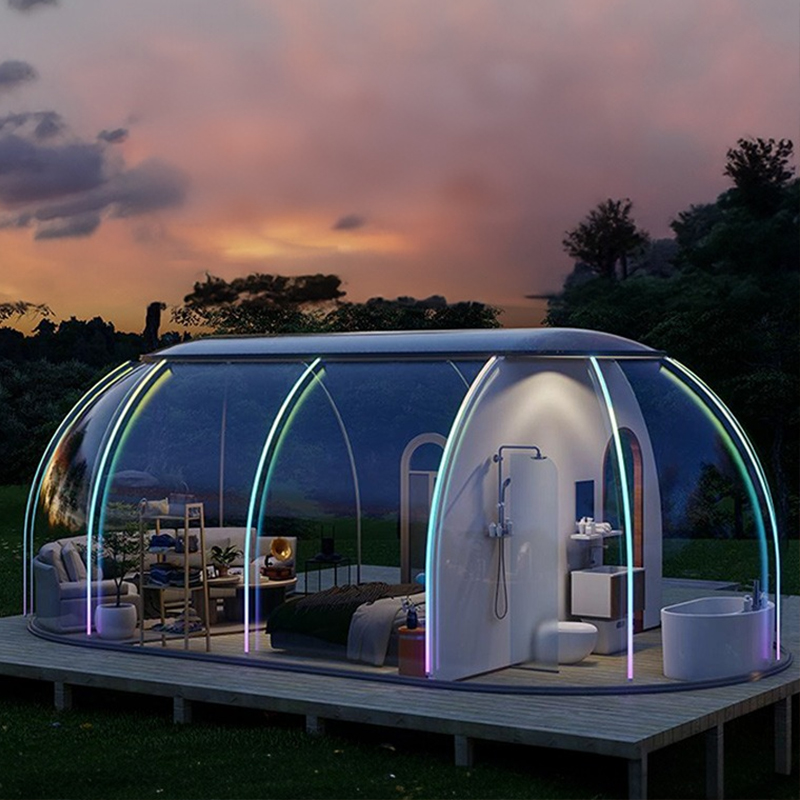
A starry sky house is a specialized architectural structure designed with transparent or semi-transparent roofing materials to provide unobstructed celestial viewing from indoor comfort. Unlike traditional skylights, these dwellings utilize advanced glazing technologies such as low-iron glass, ETFE membranes, or switchable smart glass to maximize light transmission (often exceeding 91%) while maintaining thermal insulation and weather resistance. The primary function extends beyond aesthetics; it serves as an immersive platform for astronomy education, wellness retreats, and luxury eco-tourism in low-light-pollution zones.
Successful implementation requires balancing optical clarity with habitability. High-performance starry sky houses integrate automated shading systems, radiant floor heating, and condensation management to ensure the viewing experience remains comfortable year-round. Locations are typically selected based on Bortle Scale ratings of Class 3 or lower, ensuring sufficient darkness for naked-eye observation of the Milky Way without requiring professional telescopes.
Material Technologies and Structural Integrity
The choice of transparent envelope material dictates both visual fidelity and operational lifespan. Low-iron ultra-clear glass offers superior color neutrality and scratch resistance compared to acrylic or polycarbonate, though at higher weight and cost. For geodesic dome configurations, ETFE (ethylene tetrafluoroethylene) cushions provide 95% light transmission with only 1% of glass weight, enabling larger spans without heavy structural support while resisting UV degradation for over 25 years.
Thermal and Optical Performance Standards
Maintaining indoor comfort beneath expansive glazing demands engineered solutions beyond standard residential specifications.
- Triple-Glazed Low-E Units: Achieve U-values of 0.6–0.8 W/m²K; essential for cold climates to prevent interior surface condensation during winter stargazing.
- Electrochromic Smart Glass: Transitions from clear to opaque in under 3 minutes via electrical current; eliminates need for mechanical blinds that obstruct views when retracted.
- Anti-Reflective Coatings: Reduce internal reflections by up to 99%; critical for astrophotography where stray room light creates ghosting artifacts on long exposures.
- Heated Glass Systems: Embedded conductive layers maintain surface temperature above dew point; prevents fogging during rapid humidity changes at night.
Site Selection and Light Pollution Mitigation
Location quality matters more than architectural sophistication for authentic starry sky experiences; even perfect glazing cannot compensate for excessive artificial skyglow. Ideal sites register below 21.5 mag/arcsec² on the SQM scale and lie at least 30km from urban centers with populations exceeding 50,000. Topographic shielding from distant city lights through natural landforms significantly enhances usable dark-sky hours regardless of regional light pollution maps.
Environmental Impact Considerations
Responsible starry sky house development prioritizes ecological sensitivity alongside human experience.
| Criterion | Optimal Threshold | Measurement Tool |
|---|---|---|
| Sky Brightness | <21.5 mag/arcsec² | Unihedron SQM-L / Light Pollution Map |
| Bortle Class | ≤ Class 3 | Clear Outside / Dark Site Finder |
| Annual Clear Nights | >180 nights/year | Local meteorological station data |
| Horizon Obstruction | <15° elevation mask | Theodolite survey / Stellarium simulation |
Operational Best Practices for Owners and Guests
Maintaining optimal viewing conditions requires strict light discipline and proactive maintenance protocols. All exterior lighting must be fully shielded downward-facing fixtures with correlated color temperatures below 2700K and illuminance under 5 lux at property boundaries. Interior red-light modes should be standard in all starry sky houses to preserve night vision adaptation, which takes approximately 30 minutes to reach peak sensitivity after white light exposure.
Regular cleaning schedules using non-abrasive, ammonia-free solutions preserve optical coatings and prevent micro-scratches that scatter light and reduce contrast. Automated rain sensors triggering wiper systems or hydrophobic coating applications minimize manual intervention in remote locations. Guest education programs explaining dark-sky etiquette and basic constellation identification significantly enhance satisfaction scores while reducing accidental light pollution incidents that degrade the experience for neighboring properties.

Contact Us Now
News
LET’S BUILD YOUR CUSTOMIZED PRODUCT

Copyright ©Zhejiang Jiangnan Outdoor Products Co., Ltd.All rights reserved.
