


 English
 中文简体
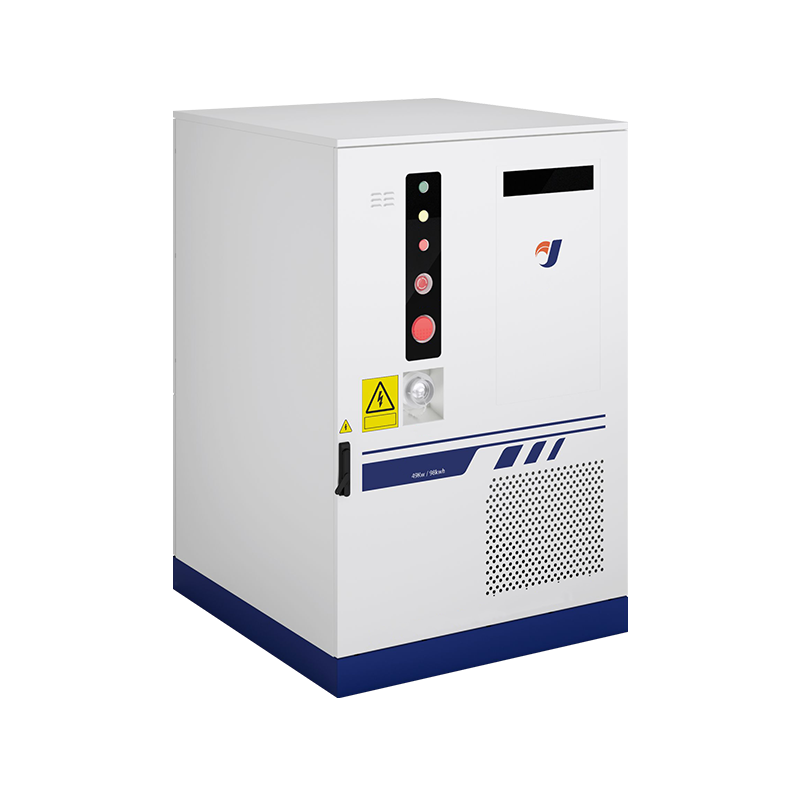
中文简体Liquid-cooled energy storage system 49KW Energy Storage Cabinet is a high-perfor...
Products
Metal Electrical Equipment Cabinets Manufacturers
-
-
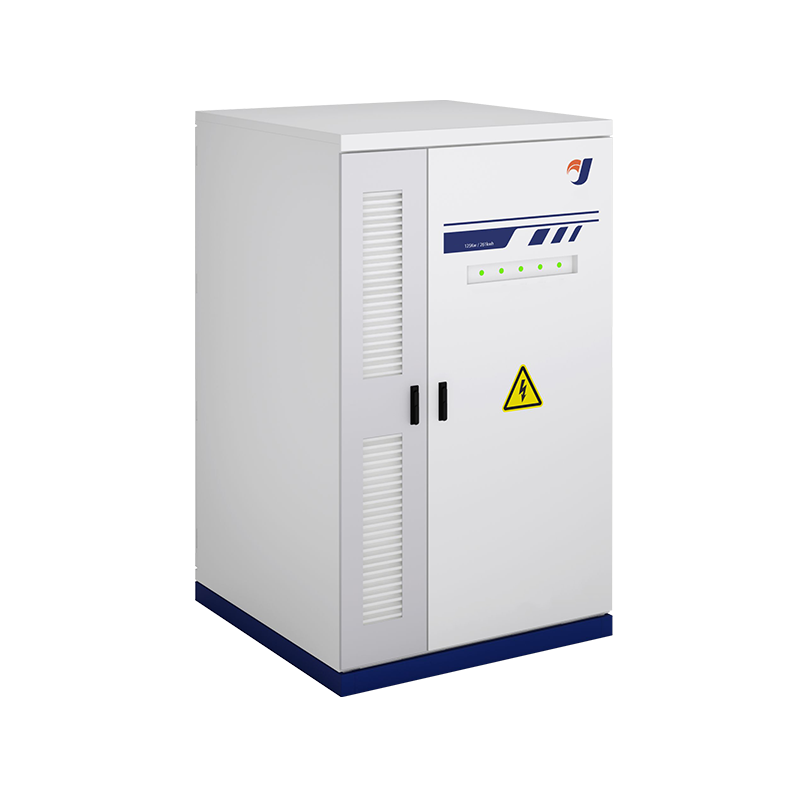 Liquid Cooling Energy Storage System 125kw Energy Storage Cabinet
The Liquid energy storage system 125KW Energy Storage Cabinet — a cutting-edge e...
-
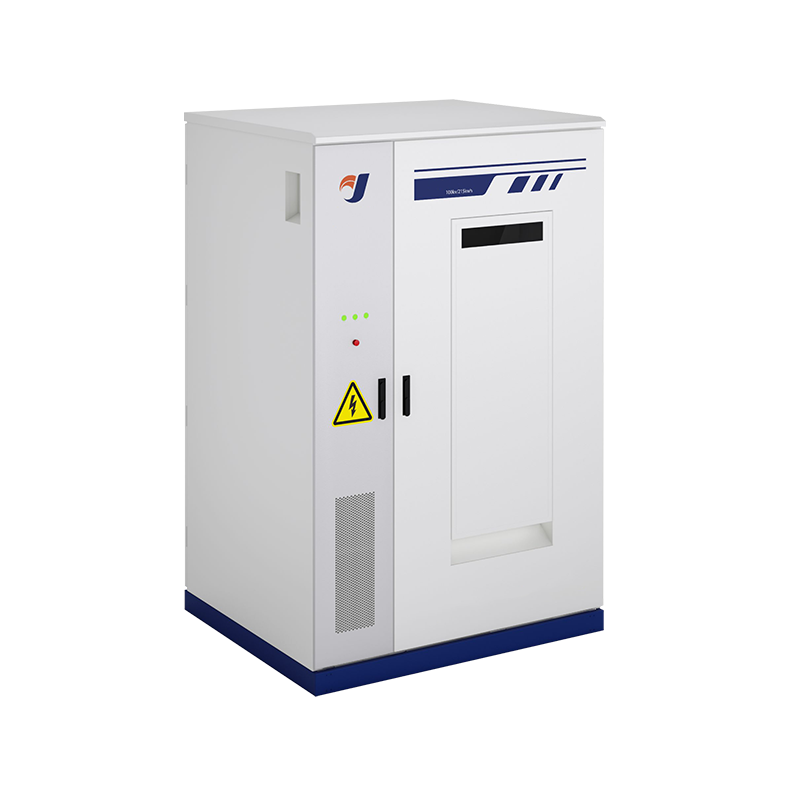 Air Cooling Energy Storage System 100kw Energy Storage Cabinet
The Wind energy storage system 100KW Energy Storage Cabinet is a smart, efficien...
Electrical equipment cabinet: reliable guarantee of industrial-grade safety protection
Metal electrical equipment cabinets are made of high-quality cold-rolled steel plates or aluminum alloys, and are treated with rust and corrosion prevention. They have a protection level of IP54 and above, and can effectively resist dust, moisture, and harsh environmental erosion. The cabinet structure is sturdy and durable, and the internal space layout is reasonable. It can flexibly install electrical components such as circuit breakers, PLCs, and inverters to meet the equipment protection needs in the fields of industrial automation, power distribution, etc. We provide standardized and customized solutions to ensure safe and stable operation of equipment. The surface electrostatic spraying process not only enhances weather resistance but also provides a variety of RAL standard colors. ISO-certified metal electrical cabinets are ideal for factories, substations, and mechanical equipment, providing all-weather professional protection for your electrical system.
ABOUT US
Zhejiang Jiangnan Outdoor Products Co., Ltd.
Zhejiang Jiangnan Outdoor Products Co., Ltd. is located in Jiashan, Zhejiang, one of the Yangtze River Delta integration demonstration areas. It has convenient transportation, adjacent to Shanghai and Suzhou, and within 100 kilometers of Hangzhou and Ningbo. It has an extremely special core geographical location and unique location advantages.
The company has fixed assets of 140 million yuan, more than 200 employees, and a plant area of more than 50,000 square meters. It has invested heavily in building an intelligent production line and has advanced production equipment such as laser cutting machines, laser pipe cutting machines, CNC bending machines, robot welding, laser welding, and automated spraying lines. As China Metal Electrical Equipment Cabinets Manufacturers and Electrical Enclosure Cabinets Factory. The company is mainly engaged in the production of outdoor furniture, office furniture (file cabinets, mobile cabinets), safes (cabinets), file compact shelving, shelves, electrical equipment and other sheet metal products.
The company has fixed assets of 140 million yuan, more than 200 employees, and a plant area of more than 50,000 square meters. It has invested heavily in building an intelligent production line and has advanced production equipment such as laser cutting machines, laser pipe cutting machines, CNC bending machines, robot welding, laser welding, and automated spraying lines. As China Metal Electrical Equipment Cabinets Manufacturers and Electrical Enclosure Cabinets Factory. The company is mainly engaged in the production of outdoor furniture, office furniture (file cabinets, mobile cabinets), safes (cabinets), file compact shelving, shelves, electrical equipment and other sheet metal products.
-
40+
manufacturing experience
-
50,000㎡
Production Plant
-
200+
Employees
-
140Million+
Fixed assets
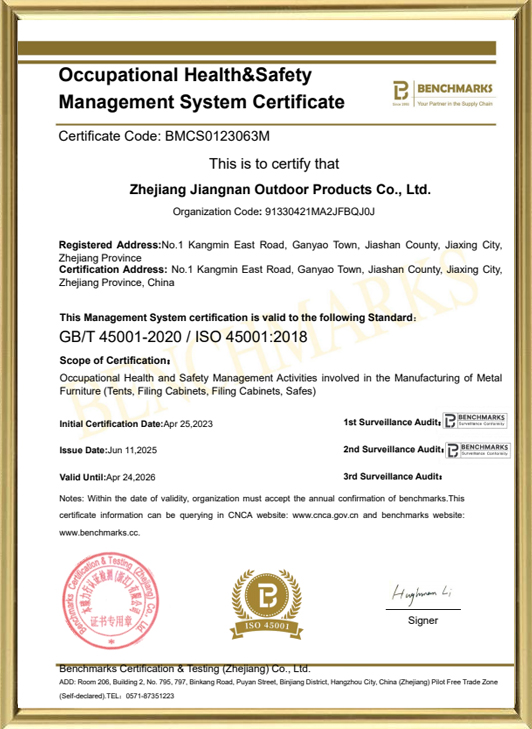
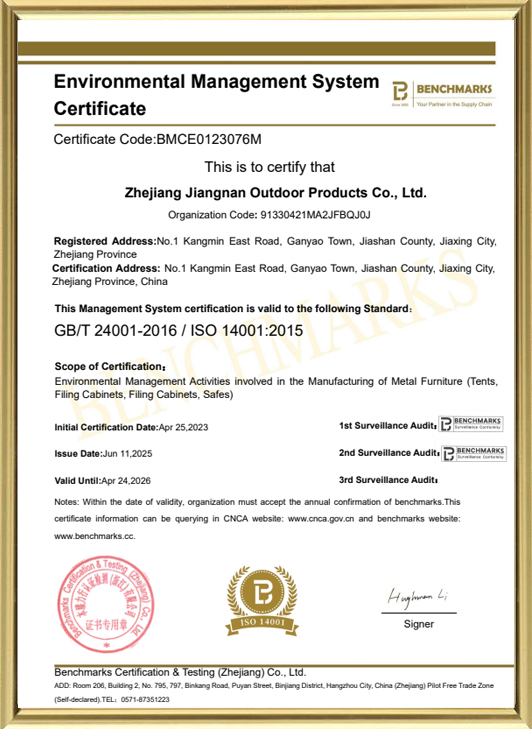
Certificates
The Honor
We Have Received.
View More
We Have Received.
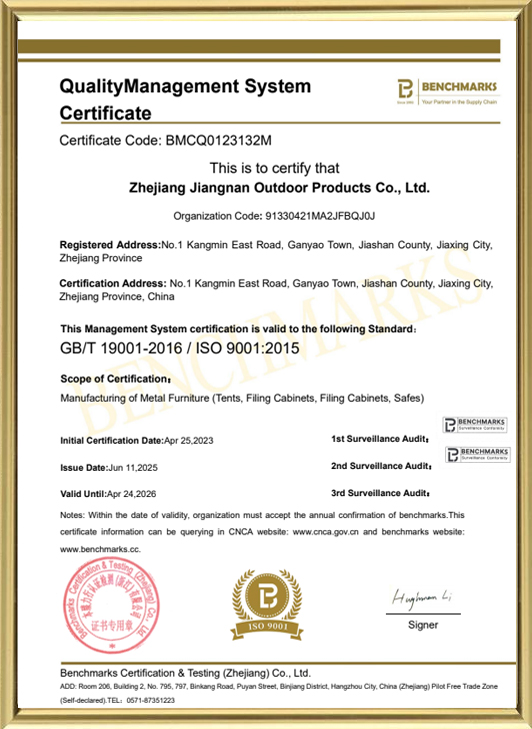
As a leading manufacturer in the Yangtze River Delta Integrated Demonstration Zone (Jiashan, Zhejiang), Jiangnan Outdoor has been awarded "National High-Tech Enterprise" and "Jiaxing Green Factory" titles, with full certifications in ISO 9001:2015, ISO 14001:2015, and ISO 45001:2018 international standards.
News
-
How Office Furniture Shapes Productivity, Health, and Culture Office furniture is no longer a background consideration in workplace planning — it is a primary lever for organizational performance, employee wellbeing, and talent retention. Research consistently demonstrates that the physical environ...
READ MORE -
Steel office furniture outperforms wood and engineered-wood alternatives on durability, security, load capacity, and long-term cost — and it does so across a wider range of environments than most buyers expect. For any office that prioritizes longevity, file security, heavy daily use, or a budget t...
READ MORE -
What a Starry Sky House Really Is — and Why People Want One A starry sky house is a dwelling — permanent or temporary — specifically designed to give occupants an unobstructed, immersive view of the night sky, typically through glass ceilings, transparent roof panels, skylights, or open-air structu...
READ MORE
Industry Knowledge
1. Thermal management best practices for metal electrical enclosure cabinets
Metal electrical cabinets conduct heat efficiently, which can be both an advantage and a liability. When high-power equipment (motor drives, power supplies, UPS units) is placed inside, rely on a combination of passive and active measures rather than a single solution. Passive measures include increased surface area (finned panels), internal thermal barriers to separate heat-generating devices, and strategic component placement to create natural convective paths. Active measures should be used where required: low-noise forced-air fans with filtered intakes, thermostatically controlled louvers, or, for tight-temperature requirements, closed-loop air conditioners sized to the cabinet's sensible heat load.
Sizing an active cooling system (practical rule of thumb)
Estimate cabinet sensible heat (watts) from equipment nameplate data. Convert watts to BTU/hr (1 W ≈ 3.412 BTU/hr). Select an air conditioner or fan-coil whose capacity exceeds the computed BTU/hr by 20–30% to allow for ambient spikes and filter loading. If forced-air cooling is used, calculate minimum airflow (CFM) using: CFM ≈ 3.16 × Watts / ΔT(°F). Use ΔT = allowable temperature rise between cabinet inlet and outlet (commonly 10–15°F for electronics).
Practical placement and airflow tips
- Place heat-generating modules in the lower half for natural convective rise and keep sensitive electronics higher, or use vertical partitioning to form separate thermal zones.
- Use baffles and cable-grommet seals to prevent short-circuit airflow across hot spots.
- Install temperature sensors at representative points (top, middle near critical equipment, and bottom) and tie them into alarms or remote monitoring.
2. Grounding, bonding and EMC considerations for metal cabinets
A metal cabinet is part of the electrical system's protective earth if correctly bonded. Proper grounding reduces touch potential, mitigates electromagnetic interference (EMI), and ensures lightning or fault currents have a low-impedance path to earth. Don't rely on paint or powder-coating to provide electrical continuity between panels and frame — provide intentional bonding points and use conductive gaskets where doors or removable panels pass RF currents.
Recommended grounding practices
- Provide a single main cabinet ground stud connected to the site protective earth with a suitably sized green/yellow conductor — size per fault-current and local code (often equal to equipment grounding conductor requirements of NEC/IEC equivalents).
- Use bolted copper or tinned copper jumpers between subpanels, doors, and removable sections to maintain low impedance during vibration or thermal cycling.
- For high-frequency EMC, implement continuous conductive paths (overlap joints, conductive gaskets, and conductive paint at flange interfaces) rather than spot-bonding, which can allow RF leaks.
3. Corrosion resistance: material choices, coatings and inspection intervals
Selecting the right substrate and protective finishing for a metal electrical cabinet depends on the environment. Mild indoor environments can use cold-rolled steel with zinc phosphating and powder-coat. Coastal, chemical, or washdown environments require stainless steel (304 or 316 depending on chloride exposure) or galvanized steel with additional polymeric coatings. Stainless steel reduces long-term maintenance but increases initial cost.
| Material / Finish | Typical use | Advantages | Notes |
| Cold-rolled steel + powder coat | Indoor, dry locations | Low cost, good aesthetics | Inspect finish for chips that expose substrate. |
| Hot-dip galvanized steel | Outdoor, moderate corrosion | Long-term sacrificial protection | May require top-coat for aesthetics. |
| Stainless steel 304 / 316 | Coastal, chemical, medical | High corrosion resistance | 316 preferred where chlorides are present. |
Inspection & maintenance schedule (practical guidance)
- Quarterly: check seals, hinge wear, and coatings for chips or undercut corrosion in light industrial settings.
- Monthly: in corrosive or coastal environments, inspect grounding connections and fasteners for evidence of galvanic corrosion.
- After maintenance actions that breach coatings, recoat with approved touch-up material and reverify continuity of EMC gaskets.
4. Cable entry systems and internal layout optimization
Poor cable entry and routing are frequent causes of overheating, ingress problems, and service difficulty. Use modular cable entry plates with grommets to maintain IP rating while allowing multiple cable diameters. Plan for a minimum bend radius for power and data cables, segregate power and control runs, and reserve a dedicated tray or duct for field-wiring to avoid disturbing factory wiring during installation.
Layout checklist before fabrication
- Document all equipment heat dissipation, weight, and mounting footprints; these drive shelf reinforcement, ventilation, and cable routing decisions.
- Provide top and bottom entry options and clearly mark field cable paths on as-built diagrams included inside the cabinet door.
- Include removable cable entry plates or knockouts positioned to avoid obstructing airflow from fans or heat exchangers.
5. Practical maintenance checklist and inspection intervals for metal electrical equipment cabinets
A consistent, documented maintenance program prolongs cabinet life and prevents unplanned downtime. The checklist below is modular — scale interval frequency with environmental severity and criticality of contained equipment.
| Interval | Actions | Acceptance criteria |
| Monthly | Visual inspection of seals, fans, indicator lights, and door latches; clean filters. | No damaged seals, fans spin freely, filters ≤ manufacturer pressure-drop spec. |
| Quarterly | Torque check on grounding and high-current terminals; verify temperature sensor operation. | Connections within torque spec, sensors report within ±2°C of reference. |
| Annually | Full internal inspection, verify paint/coating integrity, check for corrosion, exercise locks and hinges. | No active corrosion, coatings intact or scheduled for touch-up, hinges lubricated and functional. |
Record-keeping & digital tools
Keep an inspection log with date, inspector, measurements (temperatures, torque), and photos of any anomalies. Consider using cloud-based maintenance management with QR codes on cabinets to pull up history on-site — this reduces human error and speeds troubleshooting during outages.
LET’S BUILD YOUR CUSTOMIZED PRODUCT

Copyright ©Zhejiang Jiangnan Outdoor Products Co., Ltd.All rights reserved.
