


 English
 中文简体
中文简体1. Material Selection and Weather Resistance in Outdoor Furniture Choosing the right material is the...
READ MOREHow to Choose a 1 MW Battery Storage System: Power vs Energy, Cost, and Cabinet Quality
Author: Admin
Date: Sep 01,2026
If you are evaluating a 1 MW battery storage system for a commercial or industrial facility, the first thing to decide is whether you are buying 1 MW of power or 1 MWh of energy. A 1 MW/1 MWh system can deliver 1 megawatt for one hour; a 1 MW/4 MWh system can deliver the same power for four hours. Those two quotes look similar, but they are different products with different cost, cabinet, and safety requirements. For most businesses, the right answer comes from the peak-shaving window, renewable integration, or backup duration you actually need, not from the largest power number you can find. Before you request a quote, map out your discharge window, the number of cycles per day, and the future expansion plan.
Content
1 MW vs 1 MWh: What the Specs Really Tell You
Battery storage is often sold by two numbers: rated power in megawatts and energy capacity in megawatt-hours. Power tells you how fast the system can charge or discharge; energy tells you how long it can sustain that flow. For instance, a 1 MW/2 MWh configuration might run at full power for two hours, while a 1 MW/4 MWh configuration would run for four hours at the same rate.
The table below summarizes common configurations and their typical use cases.
| Configuration | Duration at Full Power | Best Fit |
|---|---|---|
| 1 MW/1 MWh | 1 hour | Demand-charge management with short peaks |
| 1 MW/2 MWh | 2 hours | Load shifting or renewable smoothing |
| 1 MW/4 MWh | 4 hours | Overnight solar shifting or microgrid backup |
If your facility sees a two-hour evening peak, a 1 MW/2 MWh system is likely enough. If you are shifting solar output overnight or supporting a microgrid for extended outages, you should plan for 4 MWh or more. Buying a bigger energy capacity than needed wastes capital; buying too little means the system will trip off before it finishes the job. Also check the round-trip efficiency. A 1 MW system with an 85% efficiency figure actually delivers 0.85 MWh of useful energy for every MWh stored, so compare suppliers on real cycle output, not nameplate capacity.
Core Components and Where Quality Fails
A 1 MW battery storage system is not a single battery pack. It includes the battery cells, a power conversion system (PCS), a battery management system (BMS), thermal management equipment, protection devices, and an enclosure that holds everything together. The most common failure points in a commercial project are thermal design and enclosure construction.
Liquid-cooled systems deliver better temperature uniformity than air-cooled systems, especially when the system is loaded at high power for several hours. The 49 kW liquid-cooled energy storage cabinet shows this approach at module scale.
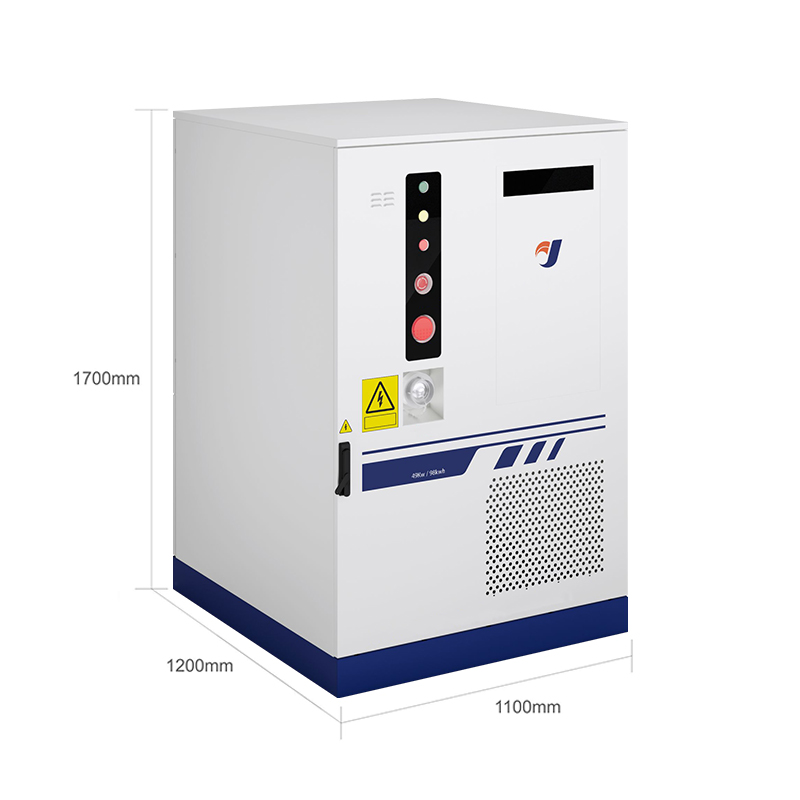 49 kW Liquid-Cooled Energy Storage Cabinet for High-Load ApplicationsThis 49 kW cabinet uses liquid cooling to maintain temperature uniformity under sustained high power, improving longevity. Its compact integration of batteries, thermal management, and monitoring makes it suitable for space-constrained commercial or industrial sites.View Product →
Poor enclosure fabrication can lead to water ingress, corrosion, and uneven heat dissipation. If the cabinet walls are too thin, or the welds are not properly sealed, long-term reliability drops regardless of the cells used. A well-designed BMS should monitor voltage, current, and temperature per module, balance cells, and stop the system before over-discharge. Without this layer of protection, even premium cells age quickly. This is why buyers should inspect the metal-work quality before signing a contract.
Cost Drivers You Should Ask About
After power and energy, the price of a 1 MW battery storage system depends heavily on the choices made inside the cabinet. The biggest cost levers are cell chemistry, cooling architecture, PCS topology, and the enclosure material.
| Factor | Options | Impact |
|---|---|---|
| Cell chemistry | LFP vs NMC | LFP offers longer cycle life and lower cost; NMC packs more energy density |
| Cooling | Air vs liquid | Liquid improves uniformity and increases cost; air is simpler but less effective |
| PCS topology | Central vs string | String architectures provide better redundancy; central designs reduce cost |
| Enclosure | Steel thickness and coating | Thicker coated steel resists corrosion but raises the bill |
A quotation that appears cheap may use lower-grade cells, a single fan, or a thin steel enclosure. These choices reduce upfront price but increase maintenance and replacement costs over the system's lifetime. For a project expected to run for 10 to 15 years, the average cost per cycle matters more than the sticker price. Bulk procurement can change pricing, but do not let volume discounts override safety and test requirements. Wind-integrated storage systems bring their own considerations, such as variable input and robust protection. The 100 kW wind energy storage system is an example of a specialty module designed for such conditions.
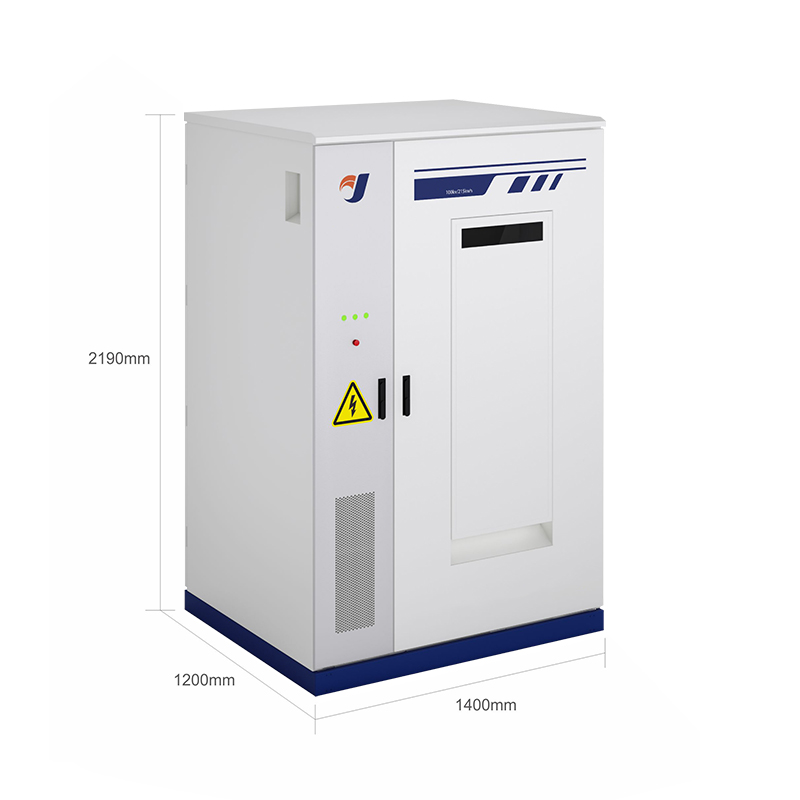 100 kW Air-Cooled Energy Storage Cabinet for Wind IntegrationDesigned for wind power systems, this 100 kW cabinet stores excess generation and smooths output fluctuations. Its modular design supports easy scaling and off-grid or hybrid operation, making it practical for remote or variable renewable energy projects.View Product →
Scalable Cabinet Modules vs Containerized Systems
For many 1 MW projects, cabinet-based modular storage offers an advantage over a single large container. Each cabinet is a self-contained unit with a battery module, thermal management, and safety equipment. You can add units as demand grows, inspect one unit without stopping the whole system, and locate the storage closer to the loads. A cabinet-based approach also simplifies transportation: a forklift can move a single cabinet, while a container requires a special truck and crane.
A 125 kW liquid-cooled cabinet, for instance, is a building block that can be scaled to 1 MW by combining eight units. This approach supports phased investment and reduces the risk of overbuilding.
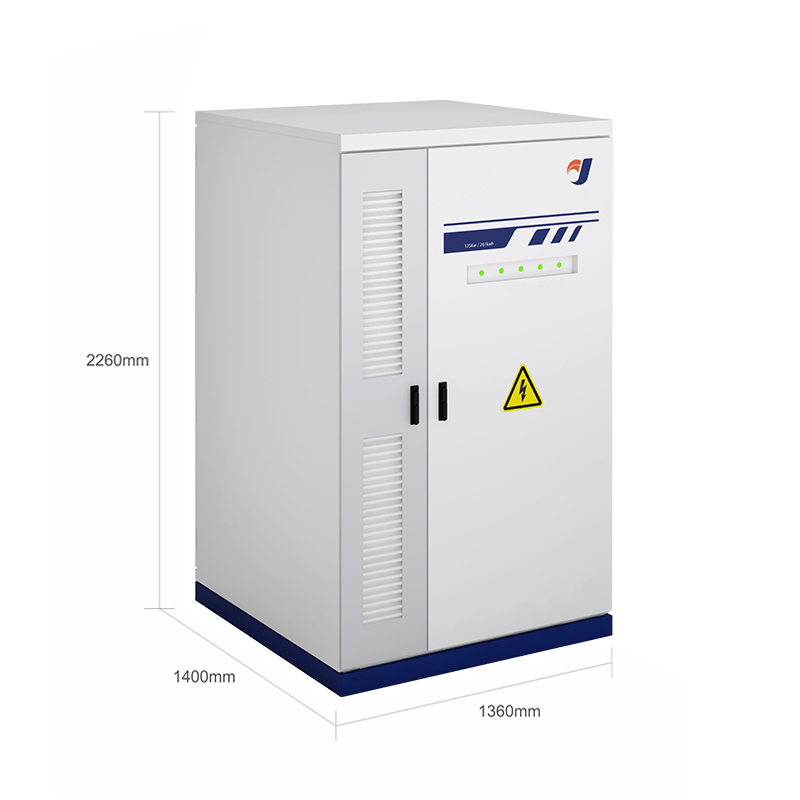 125 kW Liquid-Cooled Energy Storage Cabinet as a Scalable Building BlockThis 125 kW liquid-cooled cabinet offers a modular unit for phased expansion, allowing systems to reach 1 MW by combining units. It balances performance and maintainability, ideal for commercial facilities seeking easier installation and service.View Product →
Containerized systems are more compact and may work better for large-scale grid projects with a fixed site. But for commercial facilities, cabinet-based systems are generally easier to maintain and faster to install.
What a Fabrication-Driven Supplier Brings to a Battery Project
A battery storage enclosure is a precision sheet-metal product. It has to hold heavy modules, withstand weather, dissipate heat, and protect users from electrical hazards. A supplier that only assembles batteries without controlling the fabrication will often struggle with tolerances, sealing, and finish quality.
Zhejiang Jiangnan Outdoor Products Co., Ltd. has more than 40 years of metal manufacturing experience, with laser cutting, robotic welding, and automatic coating lines in its intelligent factory. The company holds ISO 9001, ISO 14001, and ISO 45001 certifications and is recognized as a national high-tech enterprise and a Jiaxing green factory. These capabilities directly influence the reliability of the battery cabinet's enclosure and thermal path. The company's production facilities cover over 50,000 square meters and employ more than 200 people. Its commitment to green manufacturing includes a target of 30% of production energy from solar power and zero wastewater discharge from coating by 2025.
For a deeper look at the company's certification background, see the announcement about its national high-tech enterprise certification.
Questions to Ask Before You Commit to a 1 MW System
Before you request a quotation, collect the information your supplier will need: your energy duration requirement, maximum charging window, ambient temperature range, installation space, and future expansion plans. Then ask your supplier to explain:
- What is the round-trip efficiency at the system level?
- What is the warranty on the cell, BMS, PCS, and enclosure?
- How does the thermal management system behave during a full-power cycle?
- What certifications and test reports are available for the assembled system?
- Can the cabinet dimensions and interface connections be customized for your site?
- Are there reference installations in a climate similar to yours?
Do not accept a quotation that lacks these details. A 1 MW battery storage system is an investment with operating costs, safety implications, and a long service life. The more carefully you spec the system, the better the return.

Contact Us Now
News
LET’S BUILD YOUR CUSTOMIZED PRODUCT

Copyright ©Zhejiang Jiangnan Outdoor Products Co., Ltd.All rights reserved.
